

Finding the right partner for your brand is not just a business decision, it is a growth decision. With thousands of agencies competing for your budget, knowing the digital marketing agency selection criteria that actually matter can save you tens of thousands of dollars and months of frustration. Whether you want to outsource digital marketing for the first time or switch to a better partner, this guide walks you through every step, from evaluation to execution.
U.S. businesses spent over $278 billion on digital advertising in 2024. Yet, studies show that more than 60% of brands report being unhappy with their agency within the first year. Why? Because most companies choose agencies based on presentations and promises, not on proven digital marketing agency classification criteria or measurable performance benchmarks.
This article covers everything: how to evaluate agencies, how to outsource digital marketing the right way, the value of multilingual digital marketing services, and what integrated digital marketing solutions actually look like in practice. If you are a business owner, marketing manager, or startup founder in the United States, this is the guide you have been waiting for.
What Are Digital Marketing Agency Selection Criteria?

Digital marketing agency selection criteria are the specific benchmarks, qualifications, and performance indicators you use to evaluate whether an agency is the right fit for your business. These are not just about price or portfolio, they go much deeper.
Think of it this way: choosing an agency is like hiring a senior employee. You check their experience, skills, communication style, and track record. The same logic applies here.
Core Selection Criteria to Evaluate
- Industry experience and niche expertise
- Proven case studies with measurable ROI
- Transparency in reporting and communication
- Alignment with your brand voice and values
- Knowledge of integrated digital marketing solutions
- Certified professionals (Google, Meta, HubSpot, etc.)
- Scalability, can they grow with you?
- Pricing structure and contract flexibility
Agency Evaluation Criteria at a Glance

| Criteria | What to Look For | Why It Matters |
|---|---|---|
| Industry Experience | 3–5+ years in your niche | Reduces learning curve and speeds results |
| Case Studies | Real numbers: traffic, leads, sales growth | Proves they can deliver, not just talk |
| Team Structure | Dedicated account managers \+ specialists | Better accountability and communication |
| Technology Stack | CRM, analytics, automation tools | Signals operational maturity |
| Transparency | Monthly reporting with clear KPIs | Keeps you informed and in control |
| Scalability | Flexible packages and service add-ons | Supports business growth without agency switching |
| Multilingual Capability | Native-level content in target languages | Critical for diverse U.S. markets |
| Contract Terms | Month-to-month or 6-month minimum | Reduces financial risk upfront |
Digital Marketing Agency Classification Criteria: Understanding Agency Types

Not all agencies are built the same. Understanding digital marketing agency classification criteria helps you match your needs to the right type of firm. In the U.S. market, agencies generally fall into five categories.
| Agency Type | Primary Focus | Best For | Average Monthly Cost |
|---|---|---|---|
| Full-Service Agency | All digital channels | Mid to large businesses | $5,000 – $50,000+ |
| SEO-Focused Agency | Organic search growth | Content-heavy businesses | $1,500 – $10,000 |
| Performance Marketing Agency | Paid ads and ROI | E-commerce and lead gen | $2,000 – $20,000 |
| Social Media Agency | SMM and community building | B2C brands and influencers | $1,000 – $8,000 |
| Multilingual Agency | Multicultural campaigns | Brands targeting diverse audiences | $2,500 – $15,000 |
How to Outsource Digital Marketing: A Step-by-Step Guide
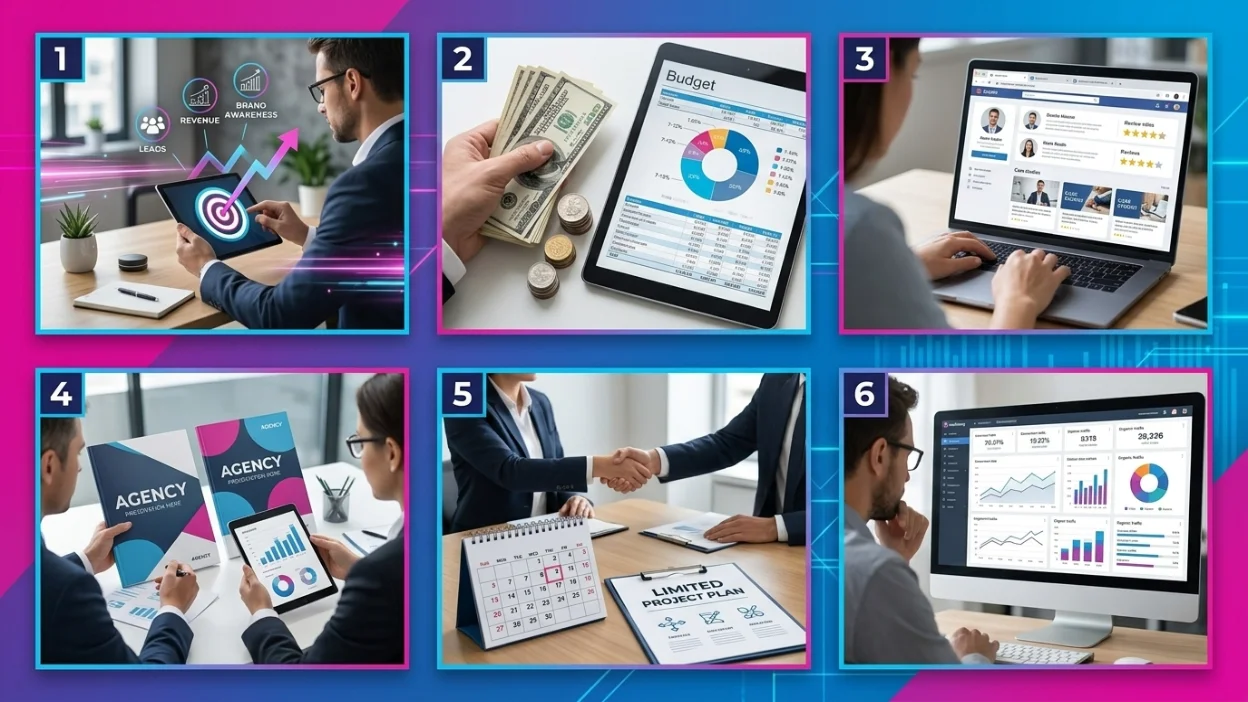
Learning how to outsource digital marketing is one of the smartest moves a growing business can make. Instead of building an expensive in-house team, you tap into specialized expertise at a fraction of the cost. Here is how to do it right.
Step 1: Define Your Marketing Goals
Before you contact a single agency, get clear on what you want. Are you trying to generate more leads? Build brand awareness? Increase e-commerce revenue? Your goals determine which agency type you need and what metrics you should track.
Step 2: Set a Realistic Budget
U.S. businesses typically spend 7–12% of their annual revenue on marketing. If your revenue is $1 million, you should budget $70,000–$120,000 per year for marketing, which includes your outsource digital marketing agency fees, ad spend, and tools.
Step 3: Research and Shortlist Agencies
Use platforms like Clutch, UpCity, and Google Search to find agencies that rank for your industry. Review their case studies, check client reviews, and verify that their digital marketing agency selection criteria align with your standards.
Step 4: Request Proposals and Evaluate
Send RFPs (Requests for Proposals) to at least three agencies. Compare their strategies, timelines, and pricing. Do not just go with the cheapest option, look for the best value and fit.
Step 5: Start with a Pilot Project
Before signing a long-term contract, run a 60–90 day pilot project. This lets you evaluate the agency's work quality, communication style, and ability to deliver results without full financial commitment.
Step 6: Set Up KPIs and Reporting
Define your Key Performance Indicators (KPIs) from day one. These should include metrics like organic traffic growth, cost per lead, conversion rate, and return on ad spend (ROAS). Your digital marketing partner should report on these monthly.
| Step | Action | Expected Result |
|---|---|---|
| 1. Define Goals | List specific, measurable marketing objectives | Clear direction for the agency |
| 2. Set Budget | Allocate 7–12% of annual revenue | Realistic scope and expectations |
| 3. Research | Shortlist 3–5 agencies from reviews and directories | Quality candidates to evaluate |
| 4. Compare Proposals | Review strategy, timeline, and pricing | Apples-to-apples comparison |
| 5. Pilot Project | 60–90 day test engagement | Proof of capability before commitment |
| 6. Set KPIs | Define traffic, leads, conversions metrics | Measurable accountability |
| 7. Sign & Launch | Finalize contract and kick off campaigns | Structured partnership begins |
Multilingual Digital Marketing Services: Why They Matter in the U.S.

The United States is the most diverse consumer market in the world. Over 68 million Americans speak a language other than English at home. If your brand is not using multilingual digital marketing services, you are leaving a massive portion of your potential audience unreached.
A multilingual digital marketing agency does more than translate your content. They culturally adapt your messaging, create language-specific SEO strategies, run targeted ads in multiple languages, and build community connections with non-English-speaking segments. This is not translation, it is transcreation.
Top Languages Driving U.S. Digital Marketing Demand
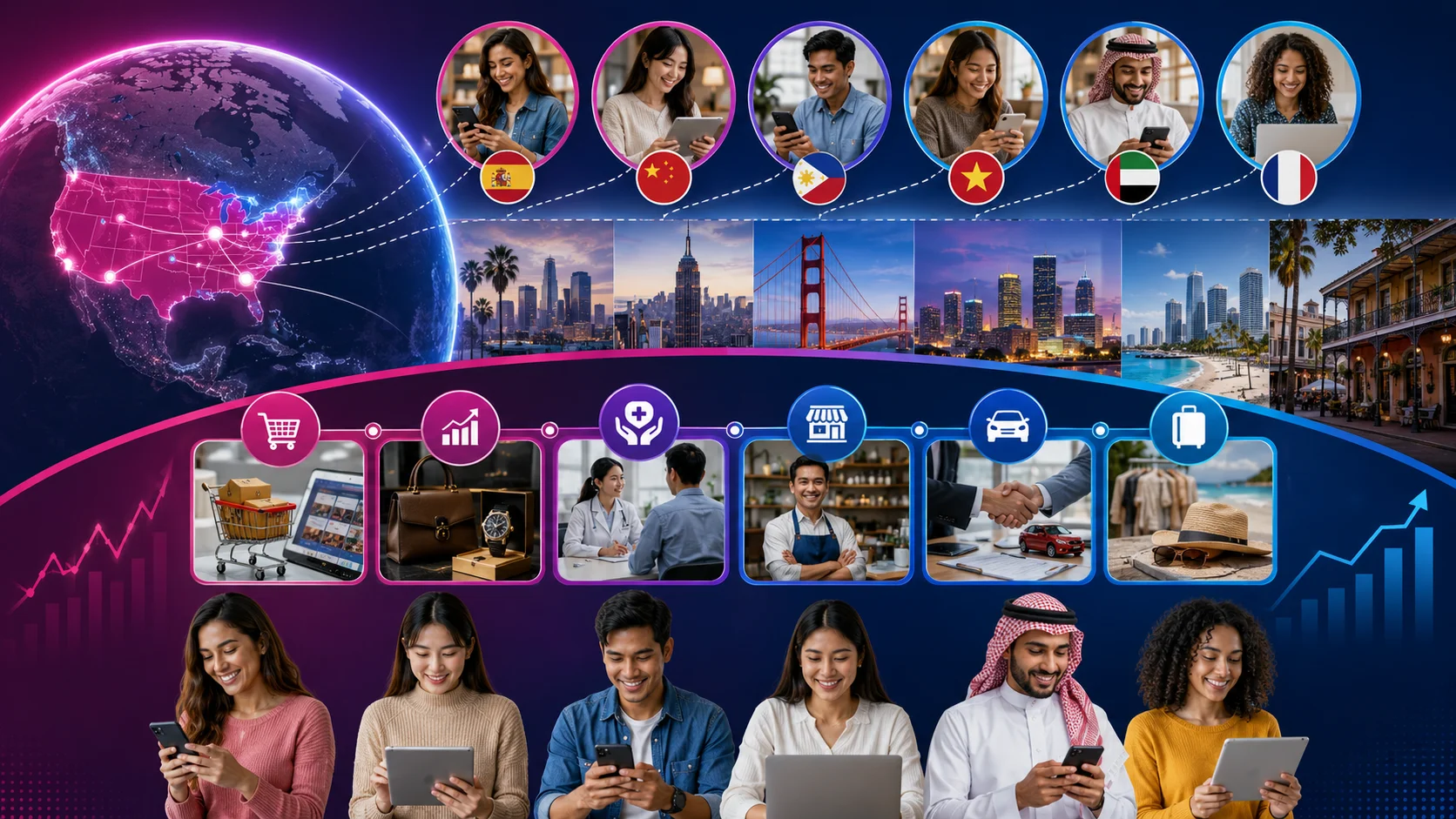
- Spanish, 41+ million native speakers in the U.S.
- Mandarin Chinese, large urban consumer markets in NY, LA, SF
- Tagalog (Filipino), 1.7 million speakers; growing purchasing power
- Vietnamese, major communities in Texas, California, and Virginia
- Arabic, significant B2B and B2C segments in Michigan, New York, and New Jersey
- French, Louisiana, New England, and Miami markets
| Language | U.S. Speaker Count | Key States | Digital Opportunity |
|---|---|---|---|
| Spanish | 41+ million | CA, TX, FL, NY | Massive e-commerce, food, and health sectors |
| Mandarin | 3.5 million | CA, NY, WA | High-income consumers, tech and luxury |
| Tagalog | 1.7 million | CA, HI, NV | Growing healthcare and professional services |
| Vietnamese | 1.5 million | CA, TX, VA | Food, beauty, and small business |
| Arabic | 1.2 million | MI, NY, NJ | Auto, finance, and real estate |
| French (Creole) | 1.1 million | FL, LA, NY | Tourism, lifestyle, and fashion |
Integrated Digital Marketing Solutions: What They Are and Why You Need Them

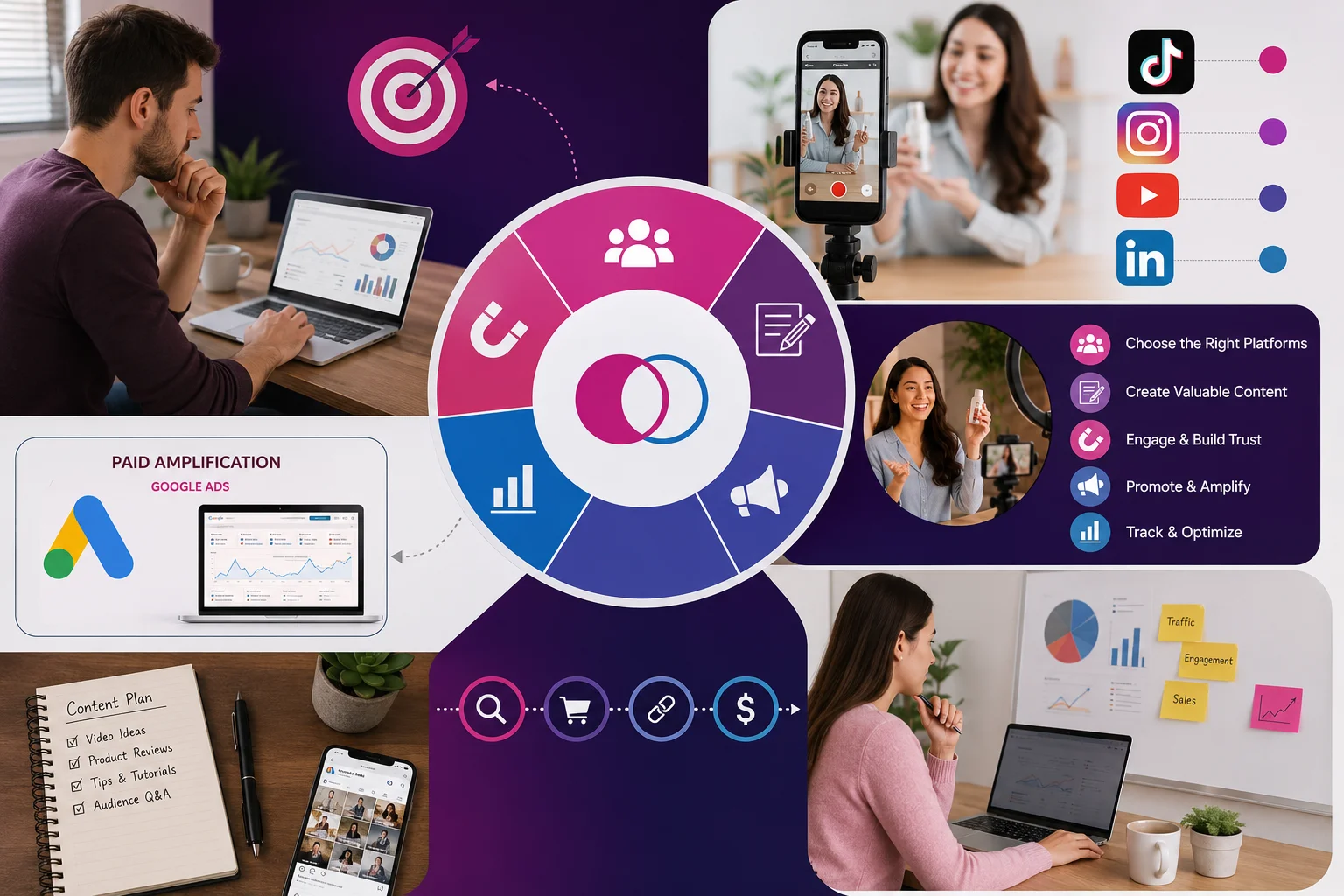
The term integrated digital marketing solutions refers to a unified marketing approach where all your channels, SEO, Google Ads, social media marketing (SMM), email marketing, and branding, work together toward the same business goal. Instead of siloed campaigns, integrated marketing creates a seamless customer experience across every touchpoint.
Think about this: a user sees your Google Ad, clicks through to your website, signs up for your email list, follows you on Instagram, and eventually makes a purchase. Each step is a different channel. When those channels are integrated, each step reinforces the next. That is what integrated digital marketing solutions deliver.
Core Components of an Integrated Strategy
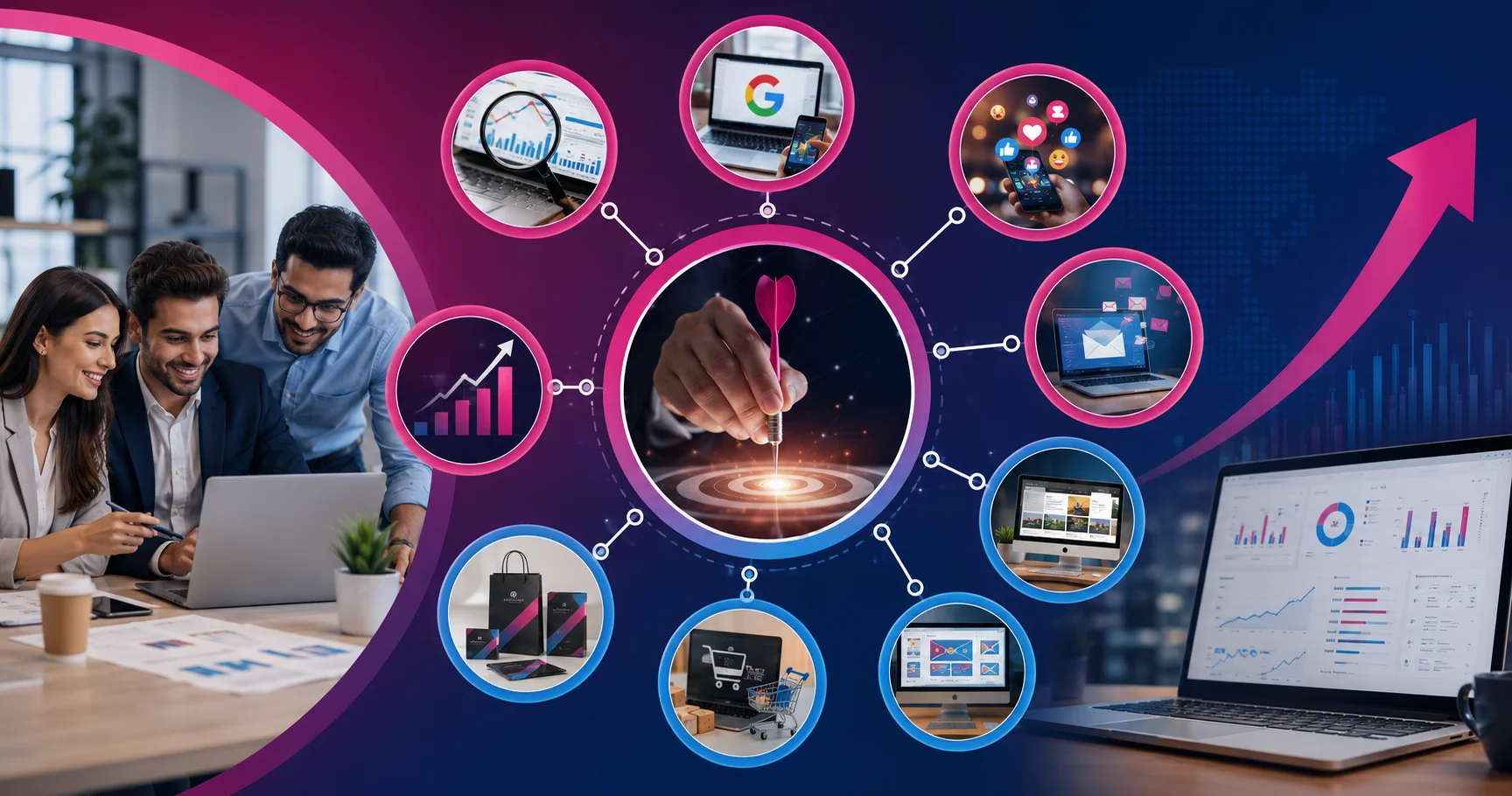
- SEO (Search Engine Optimization), drives long-term organic traffic
- Google Ads, captures high-intent buyers immediately
- Social Media Marketing, builds brand awareness and community
- Email Marketing, nurtures leads and drives repeat purchases
- Web Development, the foundation all campaigns point to
- UI/UX Design, ensures visitors convert once they arrive
- E-Commerce Solutions, enables seamless product discovery and buying
- Branding, creates consistency across all channels
Benefits of Integrated Digital Marketing Solutions
| Benefit | Explanation | Business Impact |
|---|---|---|
| Consistent Brand Voice | Same messaging across all channels | Builds trust and recognition faster |
| Higher Conversion Rates | Coordinated nurture journeys convert better | More revenue per marketing dollar |
| Better Data Insights | Cross-channel analytics show the full picture | Smarter budget allocation decisions |
| Reduced Ad Waste | Retargeting works with organic and email data | Lower customer acquisition costs |
| Faster Growth | Channels amplify each other's performance | Compound growth over time |
| Improved User Experience | Seamless touchpoints build loyalty | Higher lifetime customer value (LTV) |
Best Results-Driven Digital Marketing From Performance Agencies

Not every agency focuses on vanity metrics like likes and impressions. The best results-driven digital marketing from performance agencies is rooted in data, accountability, and ROI. Performance-based agencies align their incentives with your business goals, they win when you win.
Performance agencies typically specialize in paid media, affiliate marketing, conversion rate optimization (CRO), and advanced analytics. They use tools like Google Analytics 4, Looker Studio, SEMrush, and proprietary attribution models to track every dollar of your marketing spend. A solid Google Ads strategy paired with landing page optimization can generate a 300–500% ROAS for e-commerce businesses.
Key Metrics Performance Agencies Track
| Metric | What It Measures | Benchmark (U.S. Average) |
|---|---|---|
| Return on Ad Spend (ROAS) | Revenue generated per $1 of ad spend | 4:1 for e-commerce |
| Cost Per Lead (CPL) | Total ad cost divided by leads generated | $20–$200 (varies by industry) |
| Conversion Rate (CVR) | % of visitors who take a desired action | 2–5% (e-commerce average) |
| Customer Acquisition Cost (CAC) | Total cost to acquire one new customer | $45–$300 (SaaS and B2B) |
| Click-Through Rate (CTR) | % of people who click your ad or link | 2–5% (Google Ads) |
| Organic Traffic Growth | Month-over-month increase in SEO visitors | 10–20% MoM for new sites |
How to Choose an Outsource Digital Marketing Agency

An outsource digital marketing agency takes full ownership of your marketing operations, from strategy to execution. This is different from hiring freelancers, who handle individual tasks. An outsourced agency brings an entire team: strategists, content writers, SEO specialists, paid media managers, UI/UX designers, and analysts.
Pros and Cons of Outsourcing Digital Marketing
| Aspect | Pros | Cons |
|---|---|---|
| Cost | No salaries, benefits, or office costs | Monthly retainer fees required |
| Expertise | Access to full specialist team immediately | May lack deep brand-specific knowledge |
| Speed | Campaigns launch faster with a ready team | Onboarding period (usually 2–4 weeks) |
| Scalability | Easily scale up or down based on budget | Less day-to-day control over execution |
| Technology | Agency-grade tools included in the contract | Dependent on agency's tech stack |
| Focus | Your team stays focused on core business | Communication delays possible |
How to Verify an Agency's Credibility (Google E-E-A-T Standards)

Google's E-E-A-T framework, Experience, Expertise, Authoritativeness, and Trustworthiness, is not just a content guideline. It is a powerful lens for evaluating agencies too. The best agencies demonstrate all four qualities in how they operate and communicate.
| E-E-A-T Pillar | What to Look For in an Agency | Red Flag |
|---|---|---|
| Experience | Years in business, client tenure, industry history | Agency less than 1 year old with no track record |
| Expertise | Certified specialists, detailed case studies | Generalist team with no verifiable credentials |
| Authoritativeness | Industry awards, press coverage, thought leadership | No presence in industry directories or publications |
| Trustworthiness | Transparent pricing, contract terms, client references | Refuses to share references or hides fee structure |
The Role of Creative Services in Digital Marketing Success

Data-driven strategy is essential, but creative execution seals the deal. Agencies that also offer animation services produce more engaging video content that boosts dwell time and shares. Similarly, brands with strong branding assets see a 23% higher conversion rate on average, because visual consistency builds subconscious trust.
With mobile devices driving over 60% of U.S. web traffic, having mobile applications and mobile-optimized web applications is no longer optional. Agencies that integrate technical development with marketing deliver measurably better results because every campaign endpoint, the landing page, checkout flow, or contact form, is optimized for performance.
Do's and Don'ts When Hiring a Digital Marketing Agency
| Category | Do This ✅ | Avoid This ❌ |
|---|---|---|
| Research | Check Google reviews, Clutch, and case studies | Hiring based on a cold sales pitch alone |
| Budget | Set a clear budget range before outreach | Leaving budget open-ended (agencies will upsell) |
| Contracts | Request month-to-month or short-term options | Locking into 12-month contracts without proof of results |
| Communication | Define a weekly/biweekly check-in cadence | Assuming the agency will update you proactively |
| Goals | Set specific, measurable KPIs from day one | Using vague goals like 'get more traffic' |
| Transparency | Demand access to your own ad accounts and analytics | Letting the agency own your accounts |
| Testing | Run a pilot before committing full budget | Giving 100% of budget to a new, untested agency |
Common Problems When Working With Digital Marketing Agencies (And How to Fix Them)
| Problem | Root Cause | Solution |
|---|---|---|
| No measurable results after 3 months | Agency focused on activity over outcomes | Shift to performance-based reporting with defined KPIs |
| Communication is slow or unclear | No structured reporting cadence | Require weekly updates and monthly strategy calls |
| Budget is spent but ROI is unclear | No attribution model in place | Implement UTM tracking and GA4 dashboards from day one |
| Content sounds off-brand | Insufficient onboarding and brand guidelines | Create a comprehensive brand guide before content begins |
| SEO rankings not improving | Agency using outdated or black-hat tactics | Audit backlink profile and content quality immediately |
| Agency overpromises, underdelivers | Sales team oversold the engagement | Document all commitments in the contract before signing |
Agency Hiring Requirements Checklist
| Requirement | Mandatory / Optional | Notes |
|---|---|---|
| Verified client references | Mandatory | Speak directly with at least 2 past clients |
| Signed NDA and data privacy agreement | Mandatory | Protects your business data and customer info |
| Access to your own ad accounts | Mandatory | Never let agency own your Google/Meta accounts |
| Monthly KPI reporting | Mandatory | Minimum: traffic, leads, cost per lead, ROAS |
| Dedicated account manager | Mandatory | Single point of contact for all communication |
| Multilingual capability (if applicable) | Optional | Required if targeting non-English audiences |
| In-house content creation team | Optional | Better for consistent brand voice |
| Flexible contract terms | Recommended | Month-to-month or 90-day minimum preferred |
Before vs. After: What Good Digital Marketing Agency Selection Looks Like

| Area | Before Proper Selection | After Proper Selection | Difference |
|---|---|---|---|
| Strategy | Random campaigns with no clear goal | Unified strategy tied to revenue objectives | Direction and accountability |
| ROI Tracking | Vague reports with vanity metrics | GA4 dashboards with attribution data | Data-driven decision making |
| Content Quality | Generic blog posts written fast | SEO-optimized, audience-specific content | Better rankings and engagement |
| Ad Performance | High spend, low conversions | Optimized bidding with 4:1+ ROAS | More revenue per dollar spent |
| Communication | Chasing the agency for updates | Weekly reports and strategy calls | Peace of mind and control |
Frequently Asked Questions (FAQs)
What should I look for when choosing a digital marketing agency?
Focus on the core digital marketing agency selection criteria: industry experience, transparent reporting, proven case studies, certified specialists, and a clear pricing structure. Always ask for client references and start with a pilot project.
How do I know if I should outsource digital marketing?
If your in-house team lacks specialized skills (SEO, paid media, email marketing, analytics), or if building a full team would cost more than $200,000 per year in salaries, outsourcing digital marketing is almost always the smarter financial choice.
What are multilingual digital marketing services?
Multilingual digital marketing services involve creating, translating, and culturally adapting your marketing campaigns for non-English-speaking audiences. In the U.S., this is especially important for Spanish, Mandarin, Vietnamese, and Arabic-speaking communities.
What does integrated digital marketing mean?
Integrated digital marketing solutions mean all your channels - SEO, paid ads, social media, email, web, and branding - work together under one unified strategy. It creates a consistent experience for users across every touchpoint, which improves conversion rates and customer lifetime value.
How much does it cost to outsource digital marketing in the U.S.?
Costs vary by agency type and scope. Full-service agencies charge $5,000-$50,000 per month. Specialized agencies (SEO, paid media) range from $1,500-$10,000 per month. Performance agencies may charge a percentage of ad spend (typically 10-20%). Always factor in ad budget separately from agency fees.
Can I switch agencies if results are not there?
Yes - and you should if you are not seeing measurable progress within 90-120 days. Always maintain ownership of your ad accounts, content assets, and data so switching agencies is straightforward. A good agency will not hold your assets hostage.
For more questions?
Contact Us
What You Need to Know

- Apply strong digital marketing agency selection criteria — experience, transparency, case studies, and certified specialists
- Understand digital marketing agency classification criteria to match your needs to the right agency type
- Follow a structured approach when you outsource digital marketing: define goals, set a budget, pilot first
- Leverage multilingual digital marketing services to reach the 68+ million Americans who speak a language other than English
- Demand integrated digital marketing solutions that unify SEO, paid media, email, social, and web development
- Partner with best results-driven digital marketing from performance agencies that track ROAS, CPL, CVR, and CAC
- For healthcare practices, use effective digital marketing channels for dermatology businesses like local SEO and patient review management
Bringing It All Together

Choosing the right digital marketing partner is one of the highest-leverage decisions your business can make. With the right digital marketing agency selection criteria, a clear process for how to outsource digital marketing, and a commitment to integrated digital marketing solutions, you set your business up to compete — and win — in the U.S. market.
Whether you are a B2B company, a dermatology practice, an e-commerce brand, or a startup looking to scale, the fundamentals remain the same: choose an agency built on data, driven by performance, and aligned with your goals. If you need a partner that delivers across SEO, paid ads, web development, mobile applications, and branding, Moonshot Tech is built for exactly that.