

Search has changed forever. Google is no longer just matching keywords to web pages. It is now reading intent, understanding context, and rewarding businesses that demonstrate real expertise. If your SEO strategy is still stuck in the old playbook, you are already losing ground to competitors who have embraced full-funnel AI SEO.
This guide is built for US business owners, marketers, and SaaS founders who want to understand the evolution of SEO with generative AI, discover the best AI SEO tools available today, compare AI-driven vs traditional SEO agencies, and build a real strategy that works in a world shaped by AI search. Whether you run an e-commerce store, a B2B SaaS company, or a local service business, this guide covers everything you need to win.
We will walk through every stage of the funnel, from awareness to conversion, showing you how AI changes each phase. You will also learn how to pick the right SEO partner and tools to make it all happen.
1. What Is Full-Funnel AI SEO?

Traditional SEO focused on rankings. You picked a keyword, wrote a blog post, built some backlinks, and hoped to land on page one. That approach is no longer enough.
Full-funnel AI SEO is a strategy that aligns your entire content and optimization plan with the customer journey, using artificial intelligence to personalize, automate, and improve every touchpoint. It covers:
- Top of Funnel (TOFU): Brand awareness, educational content, and informational queries.
- Middle of Funnel (MOFU): Comparison content, solution pages, and consideration-stage searches.
- Bottom of Funnel (BOFU): Purchase intent, demo requests, pricing pages, and conversion-focused content.
AI does not just automate the writing. It helps you understand what users want at each stage, cluster topics intelligently, generate content briefs, monitor your performance, and optimize faster than any manual process ever could. Combined with strong digital marketing practices, it creates a connected growth engine.
2. The Evolution of SEO With Generative AI
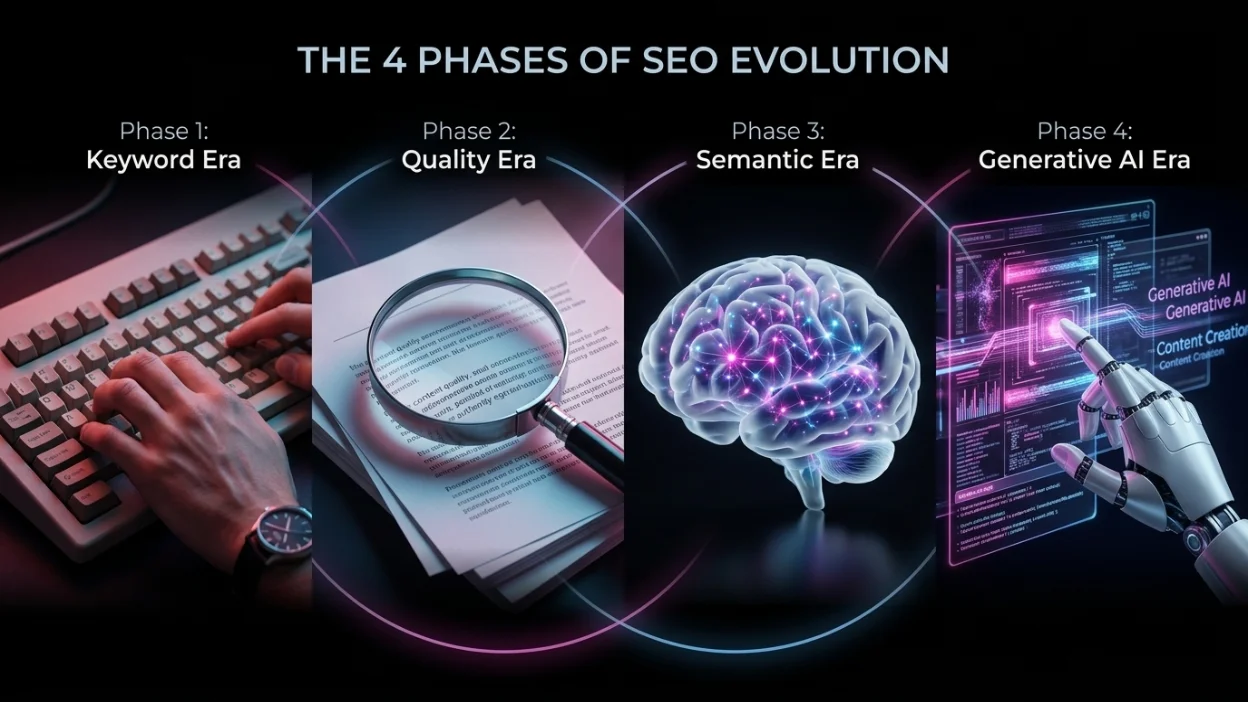
To understand where SEO is going, you need to know where it has been. The evolution of SEO with generative AI did not happen overnight. It unfolded across distinct phases that reshaped how Google and other search engines think.
Phase 1: Keyword-Centric SEO (Pre-2012)
SEO was about stuffing the right words into pages. Keyword density, exact-match domains, and link farms dominated. Google's algorithm was relatively easy to game.
Phase 2: Quality and Intent (2012–2018)
Google's Panda, Penguin, and Hummingbird updates changed everything. Low-quality content was penalized. Search began understanding user intent rather than just matching strings.
Phase 3: BERT and Semantic Search (2019–2022)
Google's BERT model brought natural language understanding to search. It started reading sentences the way humans do, understanding context and nuance in queries.
Phase 4: Generative AI and Search Everywhere (2023–Present)
This is the phase we are in now. Google launched AI Overviews (formerly SGE). ChatGPT and Perplexity became research tools for millions. Bing integrated AI deeply into results. The entire search landscape changed. Content must now satisfy AI crawlers, answer conversational queries, and build enough authority to be cited in AI-generated summaries.
SEO Evolution Timeline
| Phase | Era | Key Change | Impact |
|---|---|---|---|
| Keyword Era | Pre-2012 | Exact match keywords rule | Easy to manipulate |
| Quality Era | 2012–2018 | Panda, Penguin, Hummingbird | Content quality matters |
| Semantic Era | 2019–2022 | BERT, NLP, Intent | Context over keywords |
| AI Era | 2023–Now | Generative AI, AI Overviews | AI reads and ranks content |
3. How Can an AI Search Monitoring Platform Improve SEO Strategy
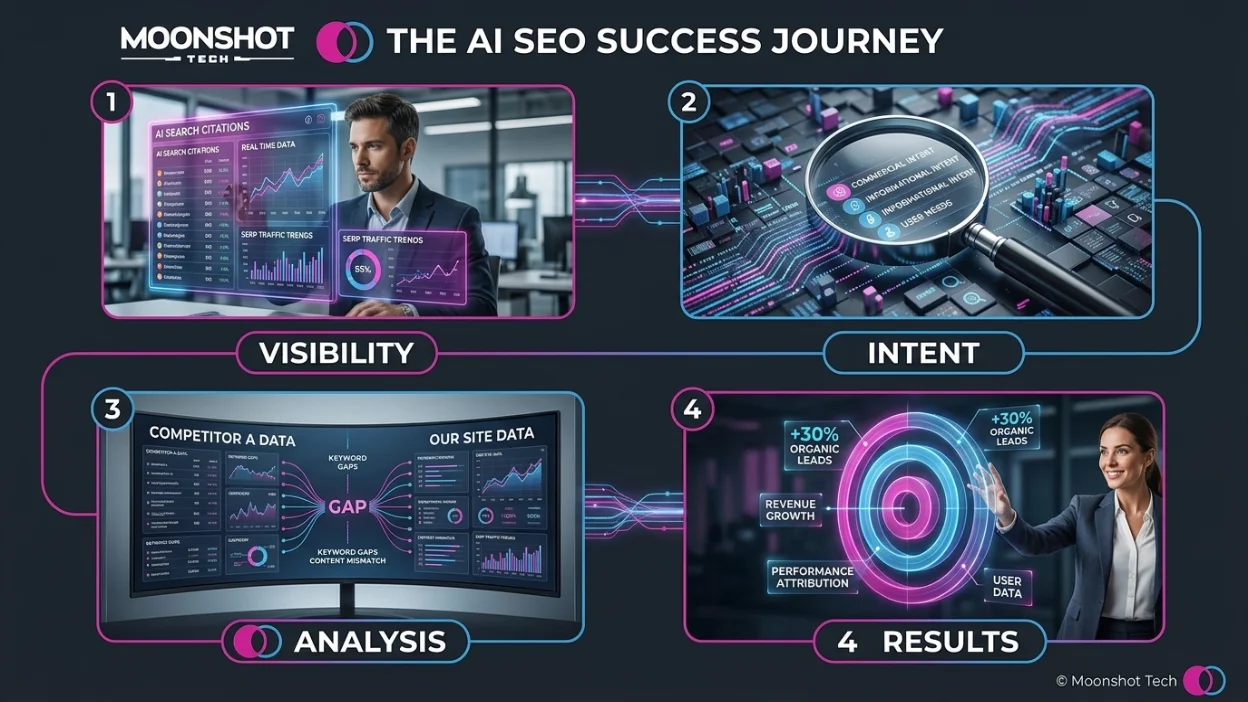
One of the most powerful shifts in modern SEO is the rise of AI search monitoring. When you ask how can an AI search monitoring platform improve SEO strategy, the answer goes far beyond tracking keyword rankings.
AI monitoring platforms collect data at scale, spot trends before they become obvious, and automate the analysis that would take a human team weeks to complete. Here is what they actually do for your strategy:
Real-Time Visibility into AI Search Appearances
When Google shows an AI Overview for a query, your monitoring platform tells you whether your content is being cited. If it is not, the tool helps identify what changes could get you included. This is critical in a world where AI Overviews are capturing a growing share of zero-click searches.
Intent Shift Detection
User search behavior changes constantly. AI monitoring tools detect when the dominant intent behind a keyword shifts, for example when a keyword moves from informational to transactional. This allows you to update your content before you lose rankings.
Competitor Gap Analysis at Scale
Manual competitor research takes hours. AI platforms can analyze hundreds of competitor pages, identify content gaps, and surface opportunities in minutes. For a growing SaaS brand or an e-commerce business, this speed is a real competitive advantage.
Performance Attribution Across the Funnel
AI monitoring does not just show you rankings. It connects organic traffic to business outcomes, helping you understand which content drives leads and revenue. When combined with proper web development and analytics setup, attribution becomes far more accurate.
AI Search Monitoring vs Traditional SEO Monitoring
| Feature | AI Search Monitoring | Traditional Monitoring |
|---|---|---|
| Data Volume | Millions of signals daily | Limited by manual capacity |
| Speed | Real-time alerts | Weekly/monthly reports |
| AI Overview Tracking | Yes | No |
| Intent Analysis | Automated & continuous | Manual & periodic |
| Competitor Tracking | Automated at scale | Manual research needed |
| Cost | Medium to high | Low to medium |
4. Which Citation Analysis Service Is Best for AI SEO

Citation analysis has taken on a whole new meaning in the age of AI search. When we ask which citation analysis service is best for AI SEO, we are no longer just talking about backlink counts. We are talking about how AI systems reference and cite your content in their generated answers.
- Traditional citation analysis: Counts and evaluates backlinks pointing to your domain from other websites.
- AI citation analysis: Tracks how often and in what context AI models like ChatGPT, Perplexity, or Google AI Overviews reference your content.
- Why it matters: Being cited in AI-generated answers increases brand authority, drives zero-click traffic intent, and improves perceived expertise.
Top Citation Analysis Approaches for AI SEO
| Service Type | Best For | AI Citation Coverage | Pricing Tier |
|---|---|---|---|
| Ahrefs / SEMrush | Traditional backlinks | Partial (AI Overview tracking) | Medium to High |
| BrightEdge | Enterprise SEO teams | Yes (AI visibility module) | High |
| Semji | Content teams | Yes (AI answer tracking) | Medium |
| Authoritas | Agency & enterprise | Yes (SERP feature tracking) | Medium to High |
| Manual LLM Querying | Startups & SMBs | Yes (hands-on) | Free to Low |
The best citation analysis service for AI SEO depends on your budget and goals. For most US businesses, starting with a combination of Ahrefs for backlink analysis and manual LLM query testing gives you solid coverage without breaking the bank. As you scale, moving to a dedicated platform like BrightEdge or Authoritas makes sense.
5. AI Content vs Human-Written SEO Content
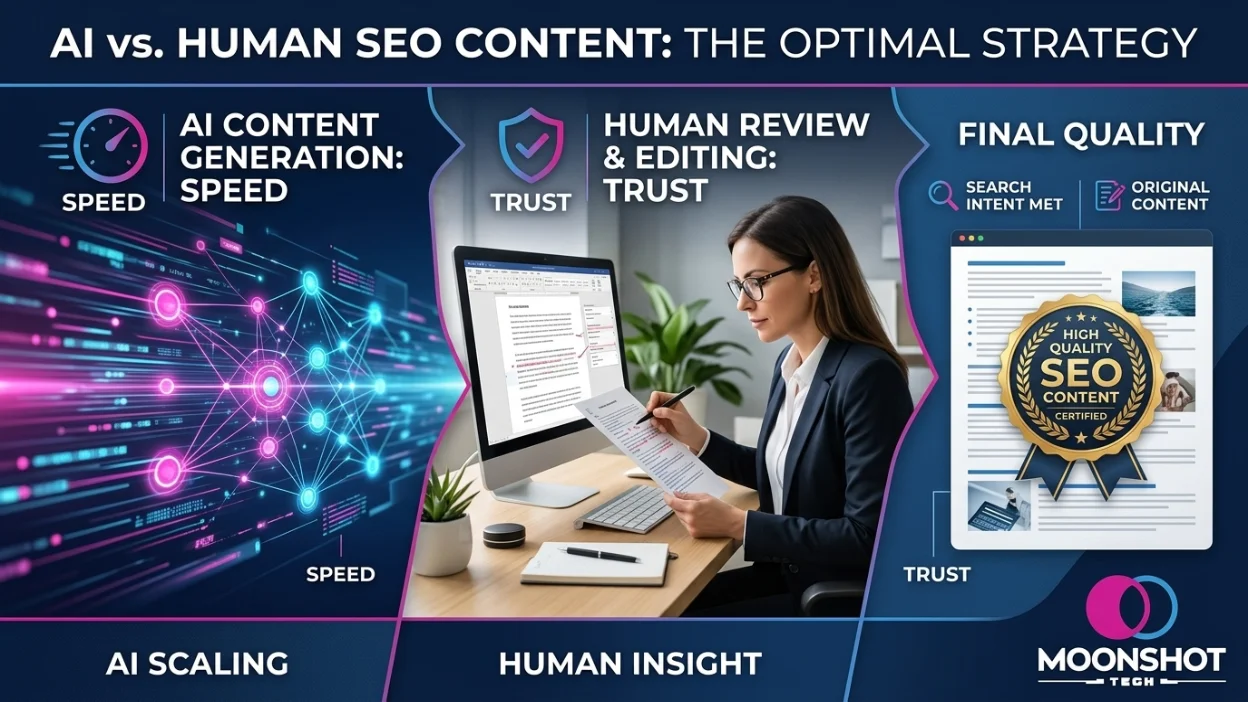
The debate over AI content vs human-written SEO content is one of the most searched topics in digital marketing right now. Let's cut through the noise with a clear, honest comparison.
What AI Content Does Well
- Speed: AI can produce first drafts in seconds, enabling rapid content scaling.
- Consistency: AI maintains tone and structure across hundreds of pieces.
- Keyword integration: AI tools easily insert target keywords and phrases.
- Research synthesis: AI can pull together data points from multiple sources quickly.
What Human Writing Does Better
- Original insight: Human writers bring personal experience and genuine expertise that AI cannot fabricate.
- Emotional resonance: Humans write in ways that connect emotionally, especially for brand storytelling.
- Trust signals: Google's E-E-A-T guidelines reward first-hand experience, something AI cannot provide authentically.
- Nuanced judgment: Complex topics require human judgment about what to include, emphasize, and avoid.
AI Content vs Human-Written Content: Pros and Cons
| Pros | Cons |
|---|---|
| Scales fast (hundreds of articles/week) | Lacks real-world experience |
| Lower cost per word | Risk of generic, low-differentiation content |
| Always grammatically correct | Can miss cultural nuance for US readers |
| Great for structured, data-driven content | May fail Google E-E-A-T requirements alone |
| Consistent formatting and style | Needs human editing to be truly excellent |
The smart answer is not either/or. The best-performing SEO content strategies in the US market combine AI for speed and scale with human expertise for accuracy, trust, and original perspective. Think of AI as a junior writer and human editors as senior strategists.
6. AI SEO Tools: Topic Cluster Maps That Win
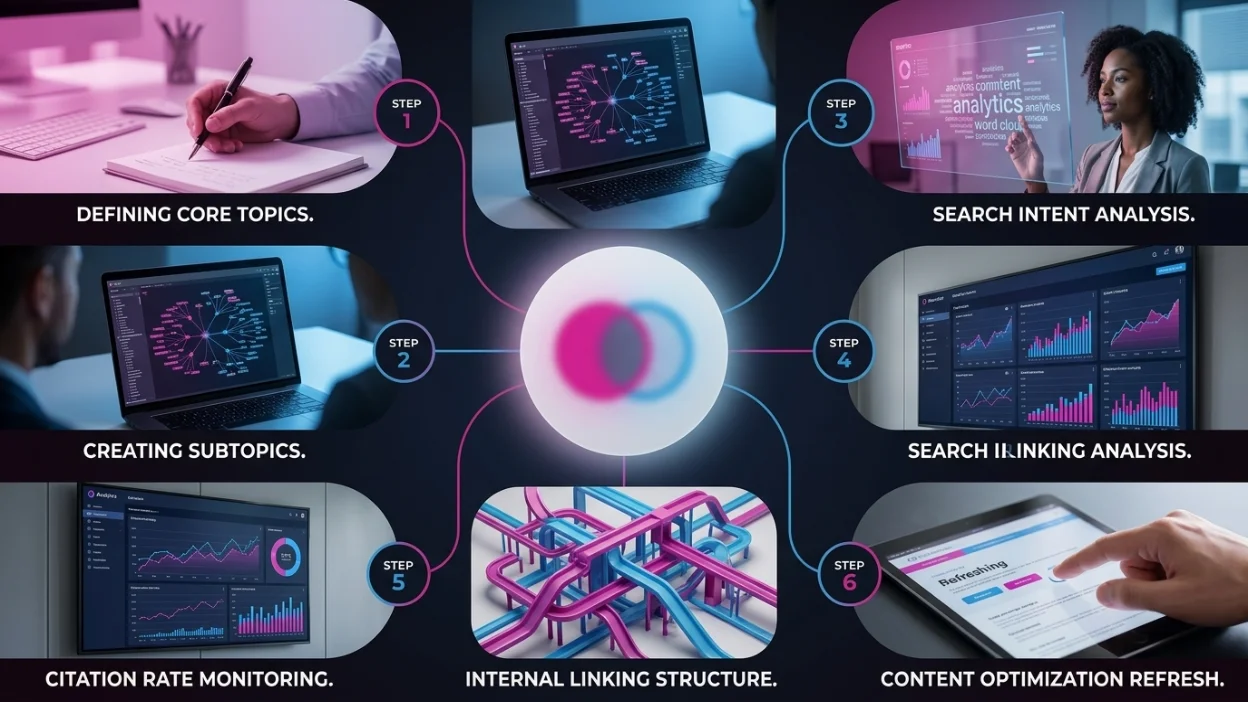
One of the most valuable applications of AI in SEO is the creation of AI SEO tools topic cluster maps. If you are not familiar with topic clusters, here is the short version: instead of writing random blog posts, you build interconnected content hubs where a pillar page covers a broad topic and supporting cluster pages cover related subtopics.
AI makes this approach dramatically more effective. Here is how it works step by step.
Step-by-Step: Building AI-Powered Topic Cluster Maps
| Step | Action | AI Tool Used | Expected Result |
|---|---|---|---|
| 1 | Define core pillar topics for your business | ChatGPT, Claude | 3–5 high-value pillar topics identified |
| 2 | Generate cluster subtopics using AI keyword tools | Semrush, Ahrefs AI | 50–100 cluster page ideas per pillar |
| 3 | Map search intent to each cluster page | AI monitoring platform | Each page aligned to TOFU/MOFU/BOFU |
| 4 | Create internal linking plan across cluster | Site audit tools | SEO equity flows correctly through site |
| 5 | Publish and monitor AI citation rate | BrightEdge, Authoritas | Track inclusion in AI Overviews |
| 6 | Refresh underperforming cluster pages | AI writing tools + human edit | Improved rankings within 60–90 days |
Topic clusters also work hand-in-hand with strong branding and web development practices. A well-structured website with a clear information architecture amplifies the SEO value of every cluster you build.
7. AI-Driven vs Traditional SEO Agencies for SaaS: Pros and Cons

If you run a SaaS business, choosing the right agency could be the most important marketing decision you make this year. The comparison of AI-driven vs traditional SEO agencies for SaaS comes down to speed, specialization, and long-term fit.
Traditional SEO agencies have years of experience and established processes. AI-driven agencies move faster, use data more aggressively, and are often better suited to the high-growth demands of SaaS companies. But neither is universally better.
AI-Driven vs Traditional SEO Agencies for SaaS: Full Comparison

| Factor | AI-Driven Agency | Traditional Agency |
|---|---|---|
| Content Speed | High (AI-assisted production) | Moderate (manual workflows) |
| Data Analysis | Automated, real-time | Manual, periodic reporting |
| SaaS Specialization | Often built for SaaS/B2B | Varies widely |
| E-E-A-T Focus | Moderate (needs human input) | Often strong |
| Pricing | Variable (tech-heavy costs) | Established monthly retainers |
| Scalability | High (AI scales content) | Limited by team size |
| AI Search Optimization | Core competency | Still being adopted |
| Long-Term Authority | Needs human expertise layer | Often stronger foundation |
Our recommendation for US SaaS companies: look for an AI-powered B2B SEO agency that blends automation with genuine industry expertise. The agency should understand your product category, your buyer persona, and how your customers search at every stage of the buying journey.
8. Best AI SEO Agency for Prompt-Optimized LLM Content
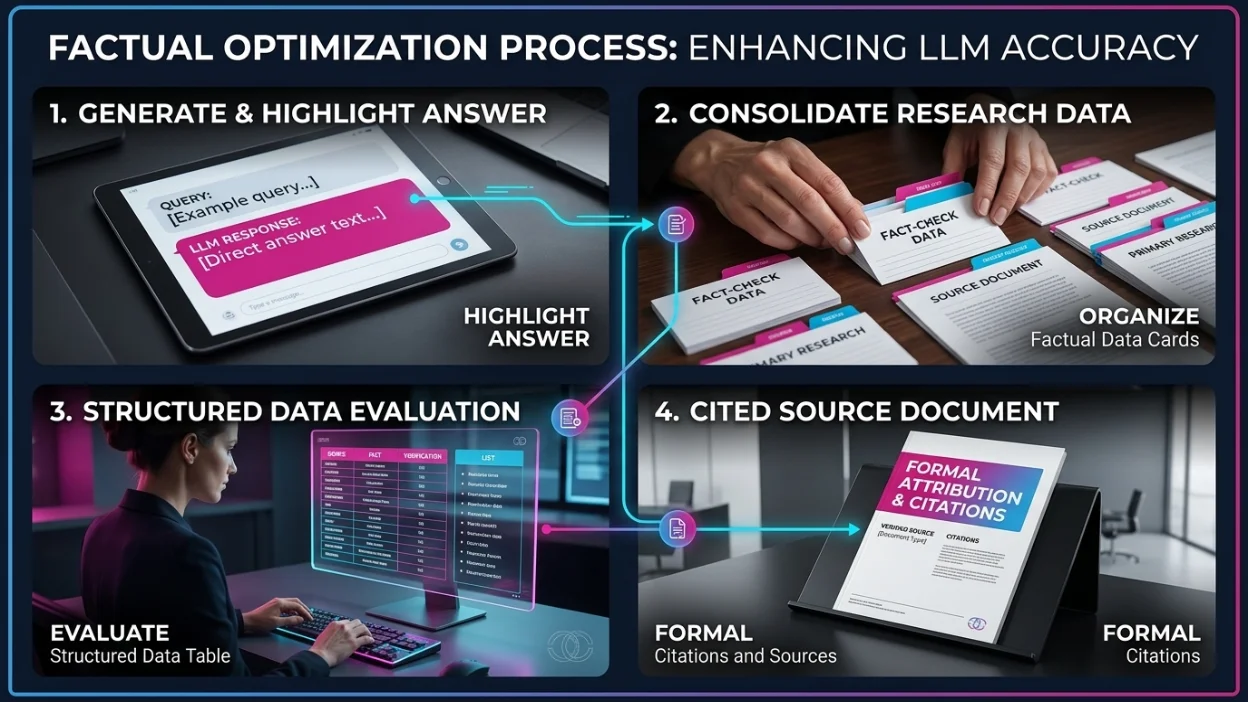
A new category of SEO has emerged: prompt-optimized LLM content. This is content written specifically to be cited, referenced, and surfaced by large language models like ChatGPT, Claude, Perplexity, and Google's AI Overviews.
What makes content prompt-optimized? It has specific structural and semantic characteristics that AI systems favor when generating answers:
- Clear, direct answers: AI models prefer content that answers questions in the first sentence, not three paragraphs in.
- Factual density: Content packed with specific data, statistics, and verifiable claims is cited more often.
- Structured formatting: Tables, numbered lists, and clear headings help AI systems parse and extract information.
- Authoritative signals: Mentions of research sources, expert quotes, and original studies increase citation likelihood.
- Semantic comprehensiveness: Covering all relevant subtopics within a piece signals completeness to AI crawlers.
The best AI SEO agency for prompt-optimized LLM content understands this emerging discipline and builds it into every piece of content they produce. When evaluating agencies, ask specifically about their process for LLM optimization, not just traditional Google ranking.
At TechWithMoonshot, our approach to SEO services integrates both traditional search optimization and AI-era content architecture. Explore our full range of SEO services to see how we approach prompt optimization for US-based clients.
9. AI-Powered B2B SEO Agency: What to Look For
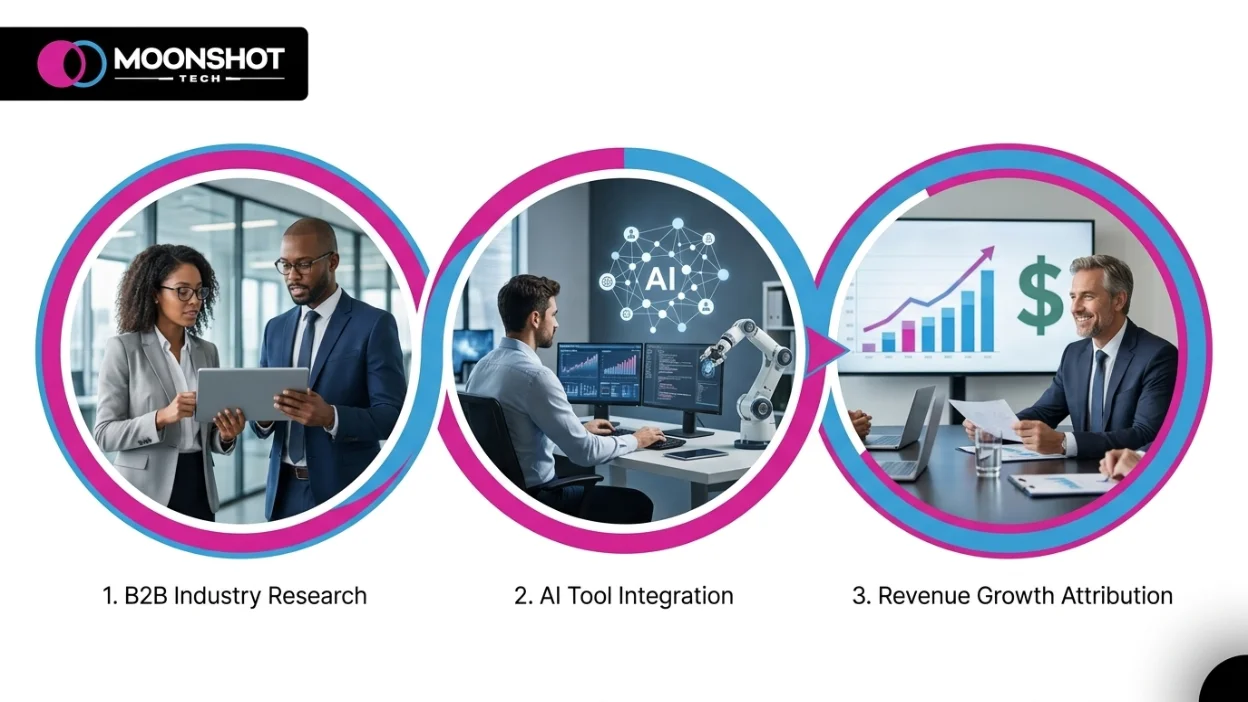
B2B SEO is fundamentally different from B2C. The buying cycles are longer, the decision-makers are more sophisticated, and the content must demonstrate genuine expertise. An AI-powered B2B SEO agency must understand these dynamics and apply AI in ways that serve complex, long-funnel sales processes.
Key Criteria for Evaluating a B2B AI SEO Agency
| Criterion | What to Look For | Red Flag |
|---|---|---|
| Industry Expertise | Case studies in your vertical | Generic portfolio only |
| AI Tool Stack | Named tools with proven ROI | Vague 'AI-powered' claims |
| Content Quality | Human-edited, expert-reviewed | Pure AI output with no editing |
| Reporting | Revenue attribution, not just rankings | Rank reports without conversion data |
| LLM Optimization | Process for AI citation targeting | No mention of AI Overviews |
| Internal Linking | Strategic link architecture plan | No internal linking strategy |
| E-E-A-T Approach | Author bios, expert interviews | Anonymous content |
B2B companies that invest in high-quality SEO also benefit from aligned email marketing campaigns and Google Ads strategies. When organic, paid, and email work together across the funnel, conversion rates improve significantly.
10. How to Implement Full-Funnel AI SEO: A Step-by-Step Guide
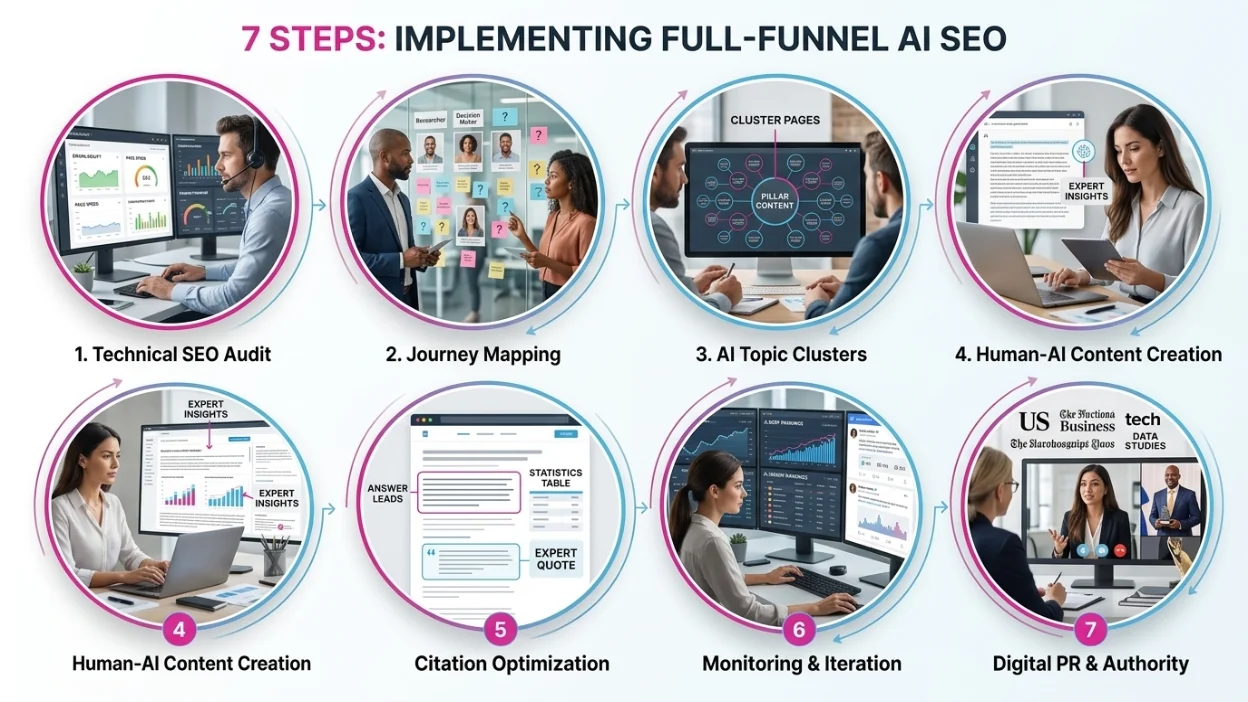
Ready to build your own full-funnel AI SEO strategy? Here is a practical implementation guide built for US businesses of all sizes.
Step 1: Audit Your Current SEO Foundation
Before adding AI, know what you have. Run a full technical SEO audit covering crawlability, page speed, mobile responsiveness, and internal link architecture. Tools like Screaming Frog or Sitebulb work well here.
Step 2: Map Your Customer Journey
Define who your buyer is, what they search at each stage of their journey, and what content format serves them best. A SaaS buyer researching solutions has different intent than one comparing pricing plans.
Step 3: Build Topic Clusters With AI
Use AI tools to generate comprehensive topic cluster maps. Identify three to five core pillar topics and build 15 to 30 cluster pages around each. Connect them with strategic internal links. Your web development team should ensure the site structure supports this architecture.
Step 4: Create Content That Satisfies AI and Humans
Write content that answers questions directly, uses structured formatting, includes real data, and demonstrates genuine expertise. Use AI for first drafts and research, then have human experts review, edit, and add original insights.
Step 5: Optimize for LLM Citation
Structure your most important pages to be citation-friendly. Lead with the answer. Include statistics. Use tables. Add expert quotes. Make it easy for AI systems to extract and reference your content.
Step 6: Monitor and Iterate With AI Tools
Set up AI search monitoring to track your appearance in AI-generated results, your rankings across traditional and AI-modified SERPs, and your competitor movements. Combine this with social media marketing for amplification.
Step 7: Build Authority Through Digital PR
Earn mentions and citations from high-authority US publications. Guest posts, data studies, and original research are the fastest routes to the kind of authority that both Google and AI systems reward.
11. AI SEO Use Cases by Business Type
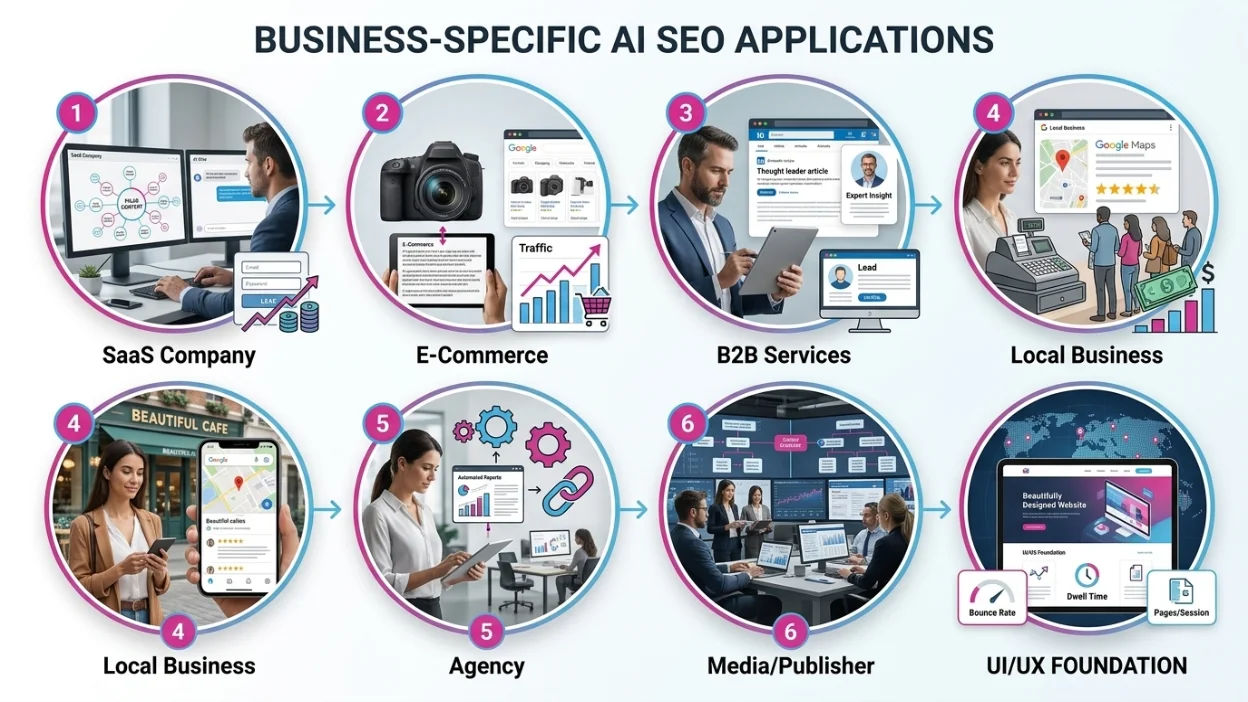
| Business Type | Best AI SEO Application | Priority Channel | Expected Outcome |
|---|---|---|---|
| SaaS Company | Topic clusters + LLM optimization | Organic + AI Overviews | Lower CAC, higher inbound leads |
| E-Commerce | Product SEO + AI-generated descriptions | Google Shopping + Organic | More product page traffic |
| B2B Services | Thought leadership + AI citation | LinkedIn + Organic | Qualified lead generation |
| Local Business | AI-local SEO + review management | Google Maps + Organic | More foot traffic, calls |
| Agency | Client reporting automation + AI content | Organic + Referral | Scalable service delivery |
| Media/Publisher | AI content at scale + topic clusters | Organic | Traffic volume growth |
Regardless of business type, strong UI/UX design is foundational. Search engines measure user engagement signals including bounce rate, dwell time, and pages per session. A beautiful, functional site keeps visitors around longer and sends positive signals to Google.
12. Key Data and Statistics on AI SEO
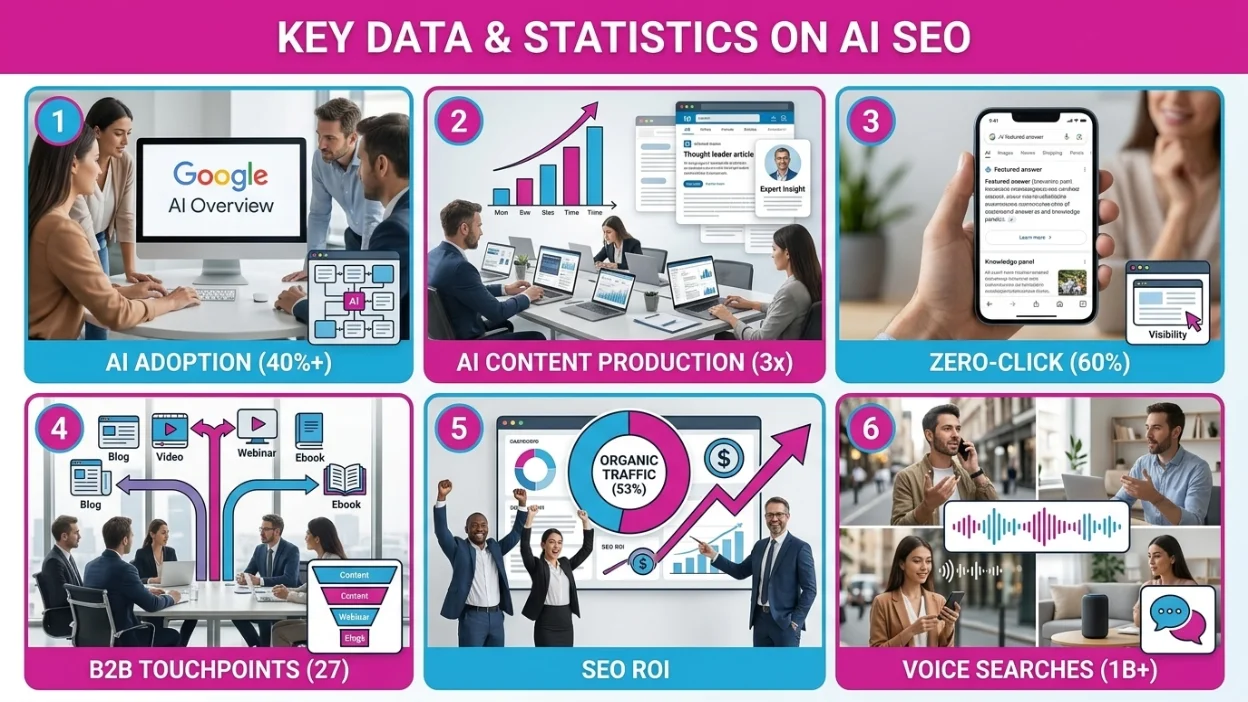
Numbers tell the real story. Here is what the data says about AI's impact on search and SEO:
| Metric | Statistic | What It Means for Your SEO |
|---|---|---|
| Google AI Overview adoption | Over 40% of US search queries now trigger AI Overviews | Your content must be structured for AI citation |
| AI content production growth | 3x increase in AI-assisted content published in the US | Differentiation through expertise is now critical |
| Zero-click searches | Approaching 60% of Google searches end without a click | Visibility in AI answers matters as much as rankings |
| B2B buying journey touchpoints | Average of 27 content interactions before B2B purchase | Full-funnel content coverage is non-negotiable |
| SEO ROI | Organic search drives 53% of all website traffic | SEO remains the highest ROI digital channel |
| Voice and conversational search | Over 1 billion voice searches per month in the US | Conversational content structure is essential |
13. AI SEO Do's and Don'ts
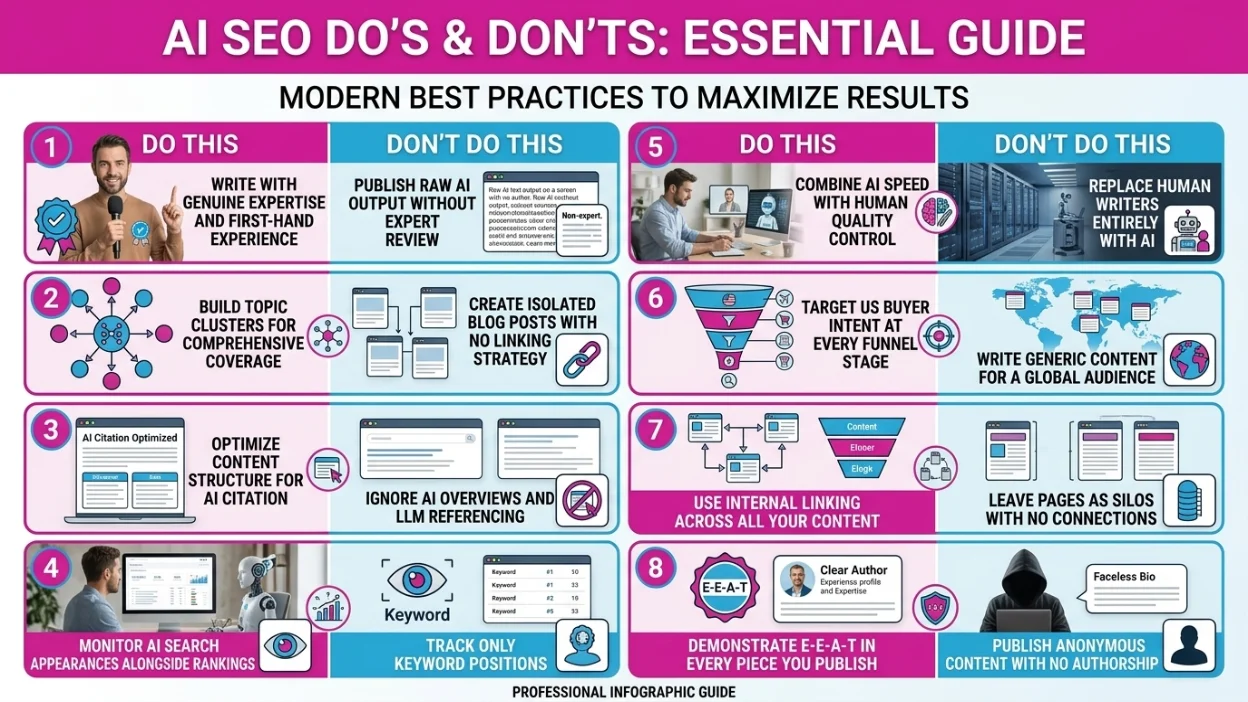
| Do This | Don't Do This |
|---|---|
| Write with genuine expertise and first-hand experience | Publish raw AI output without expert review |
| Build topic clusters for comprehensive coverage | Create isolated blog posts with no linking strategy |
| Optimize content structure for AI citation | Ignore AI Overviews and LLM referencing |
| Monitor AI search appearances alongside rankings | Track only keyword positions |
| Combine AI speed with human quality control | Replace human writers entirely with AI |
| Target US buyer intent at every funnel stage | Write generic content for a global audience |
| Use internal linking across all your content | Leave pages as silos with no connections |
| Demonstrate E-E-A-T in every piece you publish | Publish anonymous content with no authorship |
14. Technical Foundations That Amplify AI SEO Results
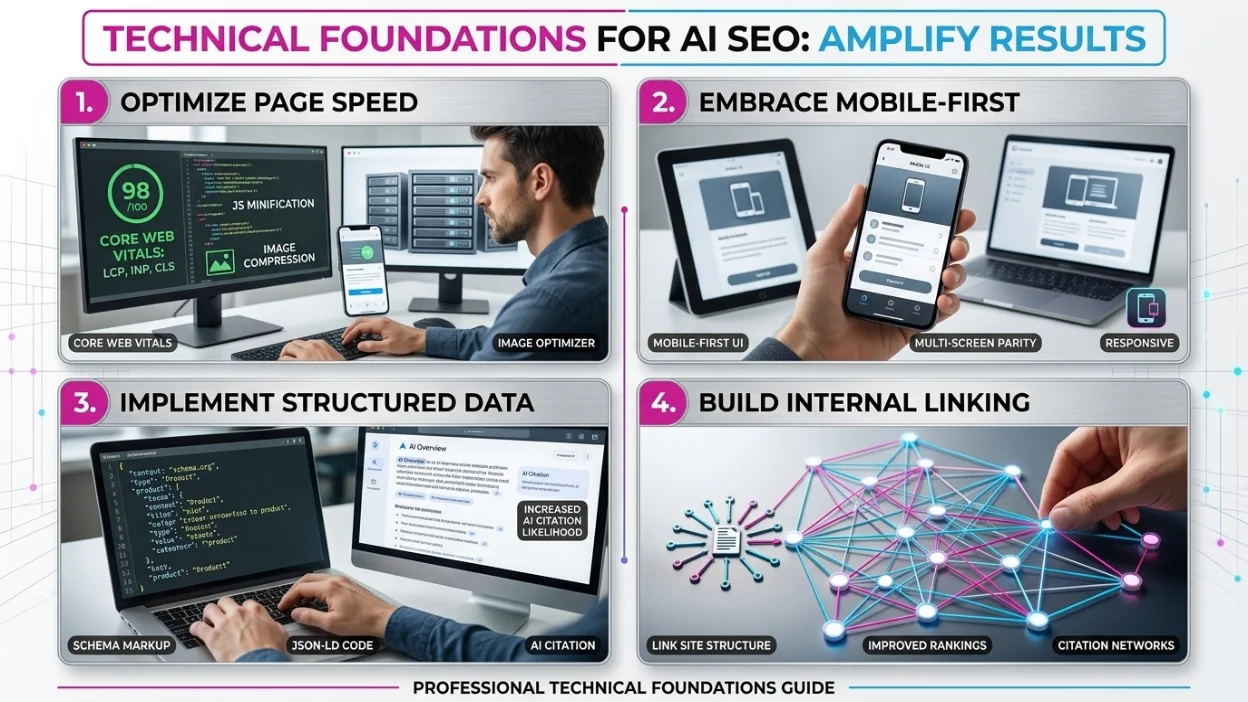
The best AI SEO strategy in the world will not deliver results if your website is slow, hard to navigate, or visually broken on mobile. Technical and design foundations matter more than ever because AI systems and Google both measure user experience signals.
- Page speed: Core Web Vitals (LCP, CLS, INP) directly impact rankings. Optimize images, reduce JavaScript bloat, and use a fast hosting provider.
- Mobile-first design: Over 60% of US searches happen on mobile. Your site must perform flawlessly on all screen sizes.
- Structured data (Schema markup): Helps AI systems understand your content type, which increases citation likelihood in AI Overviews.
- Internal link architecture: Pages that receive internal links rank better and are more likely to be cited in AI-generated answers.
Investing in premium animations and interactive design elements also improves time-on-page metrics, which sends positive user engagement signals to Google. Similarly, a strong mobile application experience supports brand authority and multi-channel engagement.
15. Frequently Asked Questions About AI SEO
What is full-funnel AI SEO?
Full-funnel AI SEO is a strategy that uses artificial intelligence to optimize content, structure, and technical SEO across the entire customer journey, from initial brand awareness all the way through to conversion and retention.
How does generative AI change SEO?
Generative AI changes SEO by introducing AI-generated search results (like Google AI Overviews) that summarize information from multiple sources. This means your content must be authoritative and well-structured enough to be cited in AI answers, not just ranked on page one.
Is AI-written content bad for SEO?
AI-written content is not inherently bad for SEO. Google evaluates content quality, not its production method. However, low-quality AI content with no human expertise or original insight will underperform. The best results come from AI-assisted content that is edited and enriched by human experts.
What is the best AI SEO tool for US businesses?
There is no single best tool. Most US businesses benefit from a combination: Ahrefs or Semrush for keyword research and backlink analysis, Surfer SEO or Clearscope for content optimization, and a monitoring platform like BrightEdge for AI search tracking.
How long does AI SEO take to show results?
Most businesses see measurable improvements in rankings and traffic within 90 to 180 days of implementing a comprehensive AI SEO strategy. AI tools speed up content production and optimization, but domain authority and E-E-A-T signals take time to build.
What is prompt-optimized content?
Prompt-optimized content is written to be easily extracted and cited by large language models and AI search systems. It features direct answers, high factual density, structured formatting, and strong authoritativeness signals. It is the frontier of modern SEO.
How do I choose between an AI-driven and traditional SEO agency?
If you are a SaaS or B2B company that needs to scale content quickly and wants to win in AI search, an AI-driven SEO agency is usually the better fit. If you are in a competitive niche where trust and authority are paramount and you have time to build slowly, a traditional agency with a proven track record may serve you better. The ideal agency combines both approaches.
Can I do AI SEO without hiring an agency?
Yes, especially if you are an in-house marketer or small business owner. Start with free and low-cost AI tools like ChatGPT for content briefs, Google Search Console for performance data, and Ahrefs Webmaster Tools for backlink monitoring. Add paid tools as you scale.
For more questions?
Contact Us
What You Should Know
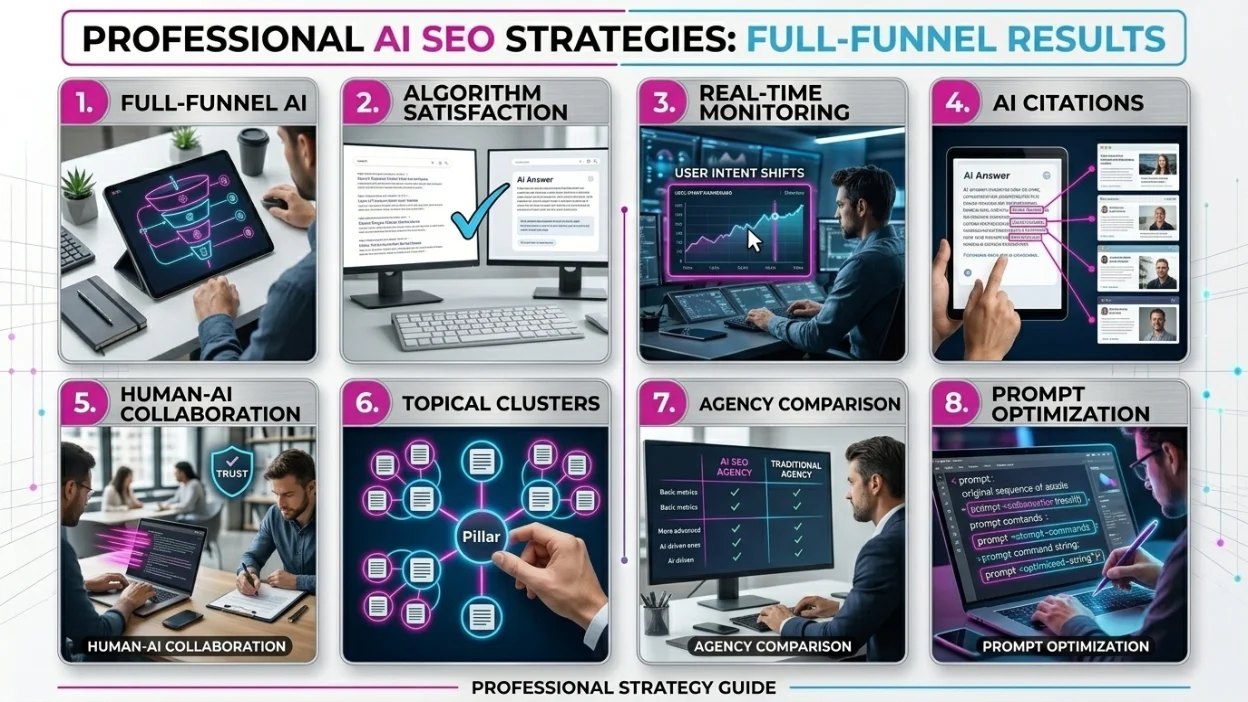
- Full-funnel AI SEO connects every stage of the customer journey with AI-powered optimization.
- The evolution of SEO with generative AI means content must satisfy both traditional search algorithms and AI citation systems.
- AI search monitoring platforms provide real-time visibility into AI-generated search results and help you stay ahead of intent shifts.
- Citation analysis for AI SEO goes beyond backlinks to track how often your content is referenced in AI-generated answers.
- AI content and human writing work best together, AI for speed and scale, humans for expertise and trust.
- Topic cluster maps powered by AI build the kind of topical authority that Google and AI systems reward.
- Choosing between AI-driven and traditional SEO agencies depends on your growth stage, budget, and content goals.
- Prompt-optimized content is the next frontier, and the best AI SEO agencies are already building it into their workflow.
The Time to Embrace AI SEO Is Now
Search is not going back. Google will keep expanding AI Overviews. ChatGPT and Perplexity will keep attracting US searchers. The businesses that win in the next three to five years will be the ones that build real expertise, structure it properly, and optimize it for both human readers and AI systems.
Full-funnel AI SEO is not a trend. It is the new standard. Whether you are just getting started or looking to level up an existing strategy, the steps in this guide give you a clear path forward.
Need expert help putting this into practice? Our team at Moonshot Tech specializes in AI-powered digital marketing strategies for US businesses. From SEO and Google Ads to e-commerce optimization and UI/UX design, we build integrated strategies that drive measurable growth. Get in touch today and let's build your AI SEO engine.