

Every business owner has had that moment of frustration: spending money on marketing, watching the numbers move, but customers still ask, “Wait, who are you again?” That disconnect usually comes down to one thing, brand awareness. It’s the invisible thread connecting a small ad you ran to the moment someone finally trusts you enough to buy.
If you’ve ever searched for what is brand awareness and gotten a textbook definition that didn’t actually help you do anything, you’re not alone. Most explanations stop at theory. This guide is different. We’ll walk through how to build brand awareness from the ground up, look at the difference between brand awareness vs reach (people mix these up constantly), explore how to measure brand awareness with numbers you can actually track, and dig into a full brand awareness strategy you can use, whether you’re running a local shop, an online store, or an AI automation agency trying to stand out in a crowded 2026 market.
We’ll also cover brand awareness kpis, the benefits of event sponsorship for brand awareness, and answer a question almost every advertiser eventually asks: which targeting option is best for achieving brand awareness. By the end, you’ll have a practical roadmap, not just definitions.
What Is Brand Awareness?

So, what is brand awareness, exactly? At its core, it’s simply how familiar people are with your business, whether they recognize your name, logo, colors, or tagline when they come across them, and whether they think of you when they have a need your product or service could fill.
There are two layers to this idea. The first is recognition: someone sees your logo and thinks, “Oh, I know that brand,” even if they couldn’t have named you first. The second is recall: someone is asked to name a few companies that do a certain thing, and your name comes up on its own, with no visual prompt at all.
Recall is the gold standard. It’s what marketers mean by being “top of mind.” If someone needs a website built and your agency’s name pops into their head before they even open Google, that’s awareness of the brand working exactly the way it’s supposed to.
Why does this matter so much? Because people buy from brands they recognize and trust, even when a cheaper or technically “better” alternative exists. Familiarity reduces perceived risk. When a customer is choosing between two companies and one name rings a bell from a podcast, a social post, or a friend’s recommendation, that’s the one they click on first.
Recognition and recall both depend heavily on consistent Branding, the logo, colors, tone, and overall presentation that make a business instantly identifiable, even at a glance. This is also why brand awareness isn’t a “nice to have” sitting at the bottom of the marketing checklist; it’s usually the foundation everything else is built on. Lead generation, conversion optimization, retention, and referrals all work better when people already have a positive (or at least neutral) impression of who you are before you ever ask them for anything. For agencies offering services like Digital Marketing, this is also a built-in product story, the same tactics you’d recommend to a client are the ones that grow your own pipeline too.
Brand Awareness vs Reach: What’s the Difference?

This is one of the most commonly confused pairs in marketing, and ad platforms don’t make it easier, Meta, Google, and LinkedIn all have campaign objectives literally labeled “Brand Awareness” and “Reach,” sitting right next to each other in the dropdown menu.
Here’s the simplest way to think about reach vs brand awareness: reach is a number, and awareness is a feeling.
Reach tells you how many unique people saw your ad or content at least once. It’s a delivery metric, it answers the question of whether something got in front of eyes. Brand awareness tells you whether those people now recognize, remember, or associate something with your brand. It’s a perception metric, it answers whether the impression actually stuck.
You can have massive reach and tiny awareness. Think about the last time you scrolled past dozens of ads in under a minute, you were “reached” by all of them, but you probably couldn’t name a single brand from that scroll five minutes later.
On the flip side, you can build strong brand awareness vs reach with a smaller audience if the content is memorable, repeated consistently, and tied to a clear visual identity. A distinctive logo, a consistent color palette, and a recognizable tone of voice are what convert a fleeting reach into an impression that actually sticks.
So when should you optimize for which? Early-stage businesses often need reach first, you can’t build recognition with an audience that’s never seen you. But once you have a baseline audience, shifting budget toward repetition, creative consistency, and message frequency tends to do more for awareness than simply reaching new cold audiences over and over again.
A good rule of thumb: reach answers “how many,” awareness answers “how well do they know us.” Both matter, but they’re solved with different tactics, and confusing the two is one of the most common reasons campaigns perform well on paper without ever moving the needle on actual brand recognition.
How to Measure Brand Awareness
If you’ve ever wondered how to measure brand awareness, the honest answer is that there’s no single number that captures it. Unlike sales or website traffic, awareness lives partly in people’s heads, so measuring brand awareness requires a mix of direct and indirect signals working together.
The good news is that most of these signals come from data you’re probably already collecting, you just need to start looking at it through an “awareness” lens instead of a “conversion” lens.
Brand Awareness KPIs to Track

Here are the brand awareness kpis that actually tell you something useful:
Branded search volume
how many people are typing your company name, or close variations and common misspellings, into Google each month. This is one of the purest awareness signals, because nobody searches for a brand name by accident.
Direct traffic
visitors who type your URL straight into the browser, or arrive with no referral source at all, are usually people who already know your business exists.
Social media mentions and tags
track how often your brand is mentioned, tagged, or shared, even when you aren’t the one posting. Social listening tools can quantify this over time and show trends.
Share of voice
what percentage of conversation in your industry mentions your brand compared to competitors. A rising share of voice usually means awareness is growing relative to the market as a whole.
Brand recall surveys
simple surveys asking which brands come to mind for a given category, run before and after a campaign, show whether unaided recall actually improved.
Impressions and frequency
impressions alone don’t equal awareness, but tracking how often the same person sees your message helps gauge whether you’re hitting the repetition needed for recall to form.
Engagement on branded content
likes, comments, shares, and saves on content featuring your logo, name, or visual identity show that people are actively recognizing and interacting with your brand, not just scrolling past it.
Follower and subscriber growth
a bit of a vanity metric on its own, but steady organic growth across social channels is a reasonable proxy for awareness expanding over time.
None of these KPIs tell the full story on their own. The trick to measuring brand awareness properly is tracking three or four of them consistently, month over month, rather than chasing one single “awareness score.” Branded search volume combined with direct traffic and share of voice gives most businesses a fairly reliable picture without needing expensive research panels.
A simple monthly habit works well here: pull your branded search numbers from Google Search Console, check direct traffic in your analytics dashboard, and scan your mentions across social platforms. Plot these three numbers in a spreadsheet over time. You don’t need fancy dashboards or paid brand-tracking software to see whether the trend line is moving in the right direction, consistency in tracking matters more than the sophistication of the tools you use.
How to Build Brand Awareness

Knowing how to build brand awareness starts with accepting one slightly uncomfortable truth: it’s slow. There’s no single ad, post, or campaign that flips a switch from “unknown” to “recognizable.” It’s built through repetition, consistency, and showing up in the same places long enough that people start to notice a pattern.
That said, some foundations make the process faster and more efficient.
Nail your visual identity first
Before spending a dollar on ads, make sure your logo, colors, fonts, and overall look are consistent everywhere, website, social profiles, email signatures, packaging, and business cards. Inconsistent branding is one of the biggest silent killers of awareness, because every variation resets the “pattern recognition” clock in someone’s head.
Pick two or three channels and commit
Trying to be everywhere at once usually means being memorable nowhere. Whether it’s a YouTube channel, a LinkedIn presence, or a podcast, pick channels where your audience already spends time, and post consistently for months, not weeks.
Create content people want to share
Educational content, behind-the-scenes looks, opinion pieces, and entertaining content all travel further than pure sales pitches. The further your content travels organically, the more awareness you build per dollar spent.
Use video and animation to stand out
Static posts get scrolled past quickly, but a well-made explainer or animated brand story tends to hold attention longer and gets remembered more vividly. If you don’t have in-house design resources, a Video Animation team can turn a simple message into something genuinely memorable.
Be consistent with messaging, not just visuals
If your tagline, tone, and core message keep shifting, people never form a stable mental picture of who you are. Pick a core message and repeat it, in different formats, across everything you publish.
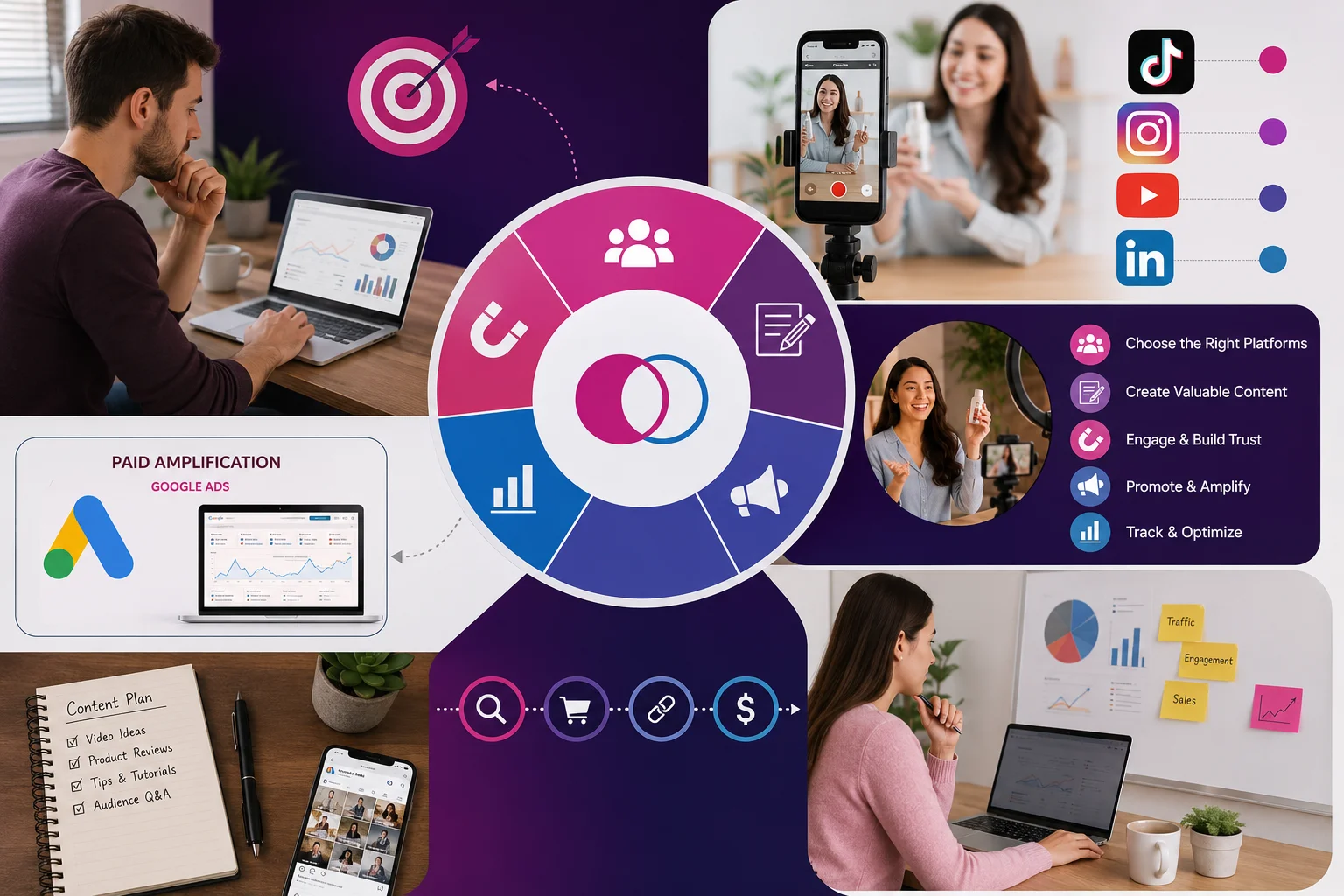
Creating a Winning Brand Awareness Strategy

A solid brand awareness strategy ties all of the above into a plan with goals, timelines, and channels, rather than a random collection of “let’s try this” tactics. Here’s a simple framework:
Define your audience precisely
“Everyone” is not an audience. The more specific you are about who you’re trying to become familiar to, the easier every other step becomes.
Set a baseline
Before launching anything new, measure your current branded search volume, direct traffic, and social following. You can’t prove growth without a starting point.
Choose your anchor channel
This is the platform where you’ll be most consistent, often wherever your audience already spends the most time.
Build a content calendar around three or four recurring themes
Repetition of themes, not just repetition of posting, helps people associate your brand with specific topics.
Layer in paid amplification
Once organic content is working, use paid promotion through platforms like Google Ads to extend the reach of your best-performing organic content, rather than creating separate “ad-only” creative from scratch.
Review your KPIs quarterly
Awareness builds slowly, so monthly swings are mostly noise. Quarterly reviews of branded search, direct traffic, and share of voice show the real trend.
Many businesses also choose to bring in a dedicated Brand Awareness partner to plan and execute this strategy rather than handling it entirely in-house, especially when internal teams are already stretched thin on day-to-day marketing tasks. A framework like this works whether you’re a local retailer, an e-commerce brand, or a B2B service provider, the structure stays the same, only the channels and content themes change.
How to Increase Brand Awareness: Proven Tactics for 2026
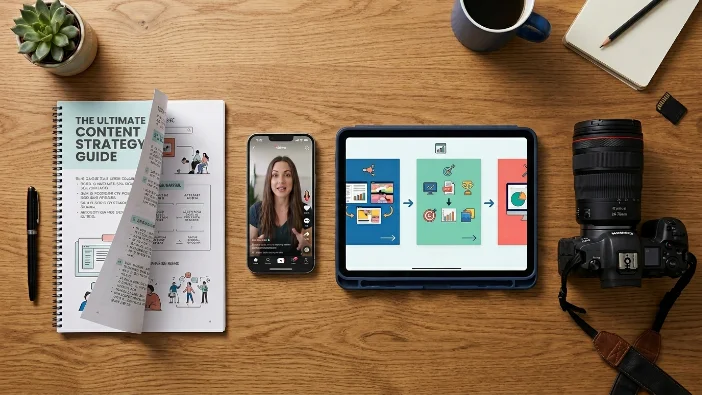
If your awareness has plateaued, the question becomes how to increase brand awareness beyond what you’re already doing. The tactics below are less about starting from scratch and more about adding new surface area, new ways for people to encounter your brand.
Collaborate with complementary brands or creators
Partnering with a business that serves the same audience, but isn’t a direct competitor, introduces your brand to an entirely new pool of people who already trust the recommendation source.
Repurpose content across formats
A single piece of long-form content, a guide, a case study, a webinar, can become a dozen short clips, carousel posts, infographics, and quote graphics. Each format reaches people who prefer that medium, multiplying your footprint without multiplying your workload.
Get featured in industry publications, podcasts, and roundups
Third-party mentions carry more credibility than self-promotion and often introduce you to audiences your own channels simply can’t reach.
Run consistent, recognizable paid campaigns
If you want to increase brand awareness through advertising, consistency in creative style matters more than constantly testing brand-new concepts. People need to see a recognizable look repeatedly before it registers.
Optimize for branded and near-branded search
As awareness grows, more people will search variations of your name. Make sure your website, Google Business Profile, and social profiles are all set up to capture and reinforce that search behavior, this is part of how to raise brand awareness organically over time.
Invest in a strong, fast, well-designed website
Your website is often the first deep interaction someone has with your brand after a quick ad or social impression. A polished Web Development project, fast load times, clear navigation, consistent branding, reinforces the impression that your business is established and trustworthy, which makes the awareness you’ve already built actually count for something.
Which Targeting Option Is Best for Achieving Brand Awareness?
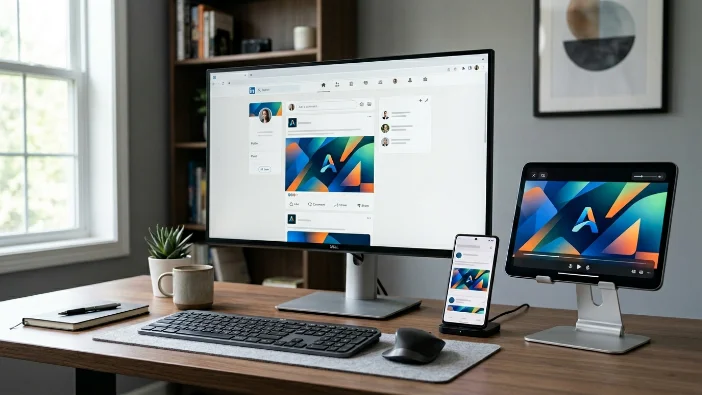
If you’re running paid campaigns, you’ve probably noticed that platforms like Meta and Google ask you to choose a campaign objective, and “Brand Awareness” is often one of them. So which targeting option is best for achieving brand awareness?
Generally, broader targeting outperforms narrow targeting for awareness goals, and this trips up a lot of advertisers who are used to optimizing for conversions, where narrow, high-intent targeting wins.
- Broad audience targeting. Platform algorithms are very good at finding people likely to engage when given a broad pool and a clear objective. For awareness, letting the algorithm find your look-alike audience often outperforms manually narrowed targeting.
- Interest and lookalike audiences based on existing customers. If you have any customer data, lookalike audiences built from your best customers tend to find people with naturally higher receptiveness to your brand, useful for early awareness pushes.
- Reach and frequency campaigns. Some platforms offer an objective specifically designed to maximize how many unique people see your ad and how often. This is the most literal answer to which targeting option is best for achieving brand awareness, it’s quite literally built for that purpose.
- Placement diversity. Allowing ads to run across multiple placements, feed, stories, search partners, display network, rather than a single placement increases the variety of contexts in which someone encounters your brand, which strengthens recall over time.
The short version: for awareness objectives, resist the urge to narrow your audience too aggressively. Save the tight, high-intent targeting for conversion campaigns running alongside your awareness efforts. Running both in parallel, with consistent creative across the board, is often the most efficient setup overall.
The Benefits of Event Sponsorship for Brand Awareness

Digital tactics get most of the attention these days, but one of the oldest awareness tools in the book still works exceptionally well: sponsorships. The benefits of event sponsorship for brand awareness are often underrated, simply because the results are harder to track in a spreadsheet than a click-through rate.
Here’s what sponsorship does that digital ads often can’t:
Association with positive experiences
When your logo appears at an event people are genuinely enjoying, a conference, a community festival, a sports tournament, a charity run, your brand gets a small piece of the positive emotion attached to that memory. This kind of association is hard to manufacture through ads alone.
Repeated, ambient exposure
Unlike a scrollable ad that disappears in a second, sponsorship branding, banners, signage, programs, badges, stage backdrops, stays in someone’s field of view for an extended period, often repeatedly throughout an event.
Credibility by association
Sponsoring a respected event or organization can transfer some of that organization’s credibility to your brand, which is particularly powerful for newer companies trying to establish trust quickly.
Networking and word-of-mouth multiplier
Attendees talk about events afterward, what they saw, who was there, what stood out. Sponsors that show up creatively, rather than just placing a logo on a banner, often become part of that conversation, extending awareness well beyond the event itself.
Localized awareness for local businesses
For brands targeting a specific city or region, sponsoring local events, school programs, community markets, local sports teams, builds awareness specifically among the geographic audience that matters most, often more efficiently than broad digital ads alone.
Content opportunities
A sponsored event is also a content goldmine, photos, videos, testimonials, behind-the-scenes footage, all of which can be repurposed across social channels for weeks afterward, extending the awareness impact of a single event investment.
The key to making sponsorship work for awareness, rather than just being a line item on a budget sheet, is showing up consistently. A one-time sponsorship is a blip; sponsoring the same event, conference, or team year after year builds the kind of familiarity that turns “I think I’ve seen that logo before” into “oh yeah, they’re always involved with this.”
How to Grow AI Automation Agency Brand Awareness in 2026

2026 has brought a wave of new AI automation agencies into a market that’s getting noisier every month. If you’re wondering specifically how to grow ai automation agency brand awareness 2026, the good news is that the same fundamentals apply, with a few twists specific to this space.
Show your work, not just your promises
AI automation is still a fairly abstract service to a lot of potential clients, they’re not entirely sure what “automation” looks like in practice. Case studies, before-and-after workflow breakdowns, and short demo videos do more for awareness in this niche than generic “we use AI to save you time” messaging.
Educate before you sell
Many business owners are curious about AI automation but don’t fully understand what’s possible. Educational content, explainer videos, simple guides, posts about tasks that can be automated, positions your agency as a knowledgeable resource, which builds awareness and trust at the same time.
Build in public
Sharing the process of building automations, including the occasional failure or iteration, makes your agency feel real and current rather than another templated “AI agency” landing page. This is especially effective on platforms where the AI automation conversation is highly active.
Leverage platform integrations as a talking point
If your agency specializes in connecting tools, CRMs, e-commerce platforms, communication tools, highlighting specific, recognizable integrations, rather than vague claims of automating everything, helps potential clients immediately picture how you’d fit into their existing setup.
Don’t neglect your own digital presence
It’s a little ironic, but plenty of AI automation agencies have surprisingly basic websites and weak SEO. Investing in your own Web Application or client portal, and even an E Commerce storefront for productized services like templates or done-for-you setups, practices what you preach and gives potential clients tangible proof of your capabilities.
Niche your messaging down
“AI automation agency” is broad and crowded. Agencies that clearly communicate which industries or workflows they specialize in, order processing, lead follow-up, client onboarding, become memorable faster than generalists, because specificity is easier to recall.
Use short-form video aggressively
Quick, punchy videos showing automations running in real time, dashboards updating, messages sending automatically, data flowing between tools, are inherently visual and tend to perform well precisely because they show rather than tell. Investing in Branding & Identity alongside this kind of content rounds out a presence that feels established rather than improvised, even for a brand-new agency.
Growing brand awareness in this space in 2026 comes down to proving capability visually and consistently, in an environment where a lot of competitors are still relying on text-heavy promises alone.
Frequently Asked Questions
What is brand awareness, and why does it matter for small businesses?
Brand awareness is how familiar your target audience is with your business, your name, logo, and what you offer. For small businesses, it matters because most purchase decisions start with familiarity. People are far more likely to choose a business they’ve heard of, even if they can’t recall exactly where, over one they’re seeing for the first time. Strong awareness shortens the path from a first impression to a first purchase.
How long does it take to build brand awareness?
There’s no fixed timeline, but most businesses start seeing measurable shifts, increases in branded search, direct traffic, or social mentions, after roughly three to six months of consistent effort. Significant, durable awareness, where your brand is genuinely known in your space, usually takes a year or more of steady, repeated exposure across multiple channels.
What’s the difference between brand awareness and brand recognition?
They’re closely related but not identical. Recognition is visual, someone sees your logo or packaging and identifies it as yours. Awareness is broader and includes recall, someone thinking of your brand without any visual prompt, simply because your name comes to mind when they think about a category or need.
Can I measure brand awareness without expensive research tools?
Yes. Branded search volume, available free through tools like Google Search Console, direct website traffic in your analytics, and social media mentions are all accessible without paid research panels. Combining even two or three of these gives a reasonably reliable picture of whether awareness is trending up or down.
Is paid advertising necessary to increase brand awareness?
No, but it accelerates the process. Organic content, partnerships, and word-of-mouth can build awareness on their own, just more slowly. Paid campaigns, particularly those run with a reach or frequency objective, help put your content in front of more people, more consistently, which is especially useful when launching a new brand or entering a new market.
How does brand awareness affect SEO?
Brand awareness and SEO reinforce each other. As more people search your brand name directly, search engines treat that as a signal of trust and relevance, which can help your overall site authority. At the same time, ranking well for informational content like guides and how-tos puts your brand in front of people who may not have known you existed, building awareness in the process.
What’s a realistic budget for a brand awareness campaign?
This varies widely depending on industry, audience size, and goals, but a common approach is to start with a modest, consistent monthly budget rather than a single large burst. Steady, smaller spends over several months tend to outperform a single large campaign for awareness specifically, because repetition matters more than reach in any single moment.
Should startups focus on brand awareness or conversions first?
Most startups need a blend of both from day one, but the ratio shifts over time. Early on, some awareness-building is necessary simply because nobody knows you exist yet, without it, conversion campaigns have nothing to convert. As your audience grows, you can shift more budget toward conversion-focused campaigns while maintaining a smaller, steady awareness presence to keep growing your reach.
For more questions?
Contact Us
Building real, lasting brand awareness isn’t a single campaign or a single channel, it’s the cumulative effect of consistent visuals, consistent messaging, and consistent presence across the places your audience already spends time. Whether you’re focused on how to build brand awareness from zero, working on how to increase brand awareness among people who already know you a little, or specifically figuring out how to grow ai automation agency brand awareness 2026 in a crowded niche, the fundamentals don’t change: show up reliably, measure the right signals, and give people a reason to remember you that has nothing to do with a discount code. If you’re not sure where to start, pick one channel, one consistent visual identity, and one core message, and give it a real chance, at least a few months, before judging the results. Brand awareness rewards patience and repetition far more than it rewards a single clever campaign, and the businesses that look effortlessly recognizable today almost always put in months of unglamorous, consistent work to get there.